

Egypt Tours with Nile Cruise
Enjoy the best of Egypt with a combined Egypt tour and Nile cruise: the Pyramids, the temples of Luxor and Aswan, and a relaxing journey along the Nile—supported by expert local guidance, seamless service, and more than 70 years of award-winning expertise.
Our Hand-Picked Egypt and Nile Cruise Combinations
Browse our most popular combinations of Egypt tours and Nile cruises, shaped by decades of experience and designed for stress-free travel.
How an Egypt Trip with a Nile Cruise Actually Works
There’s a particular moment, somewhere between Luxor and Aswan, when you realize you’re seeing the same Nile that pharaohs sailed.
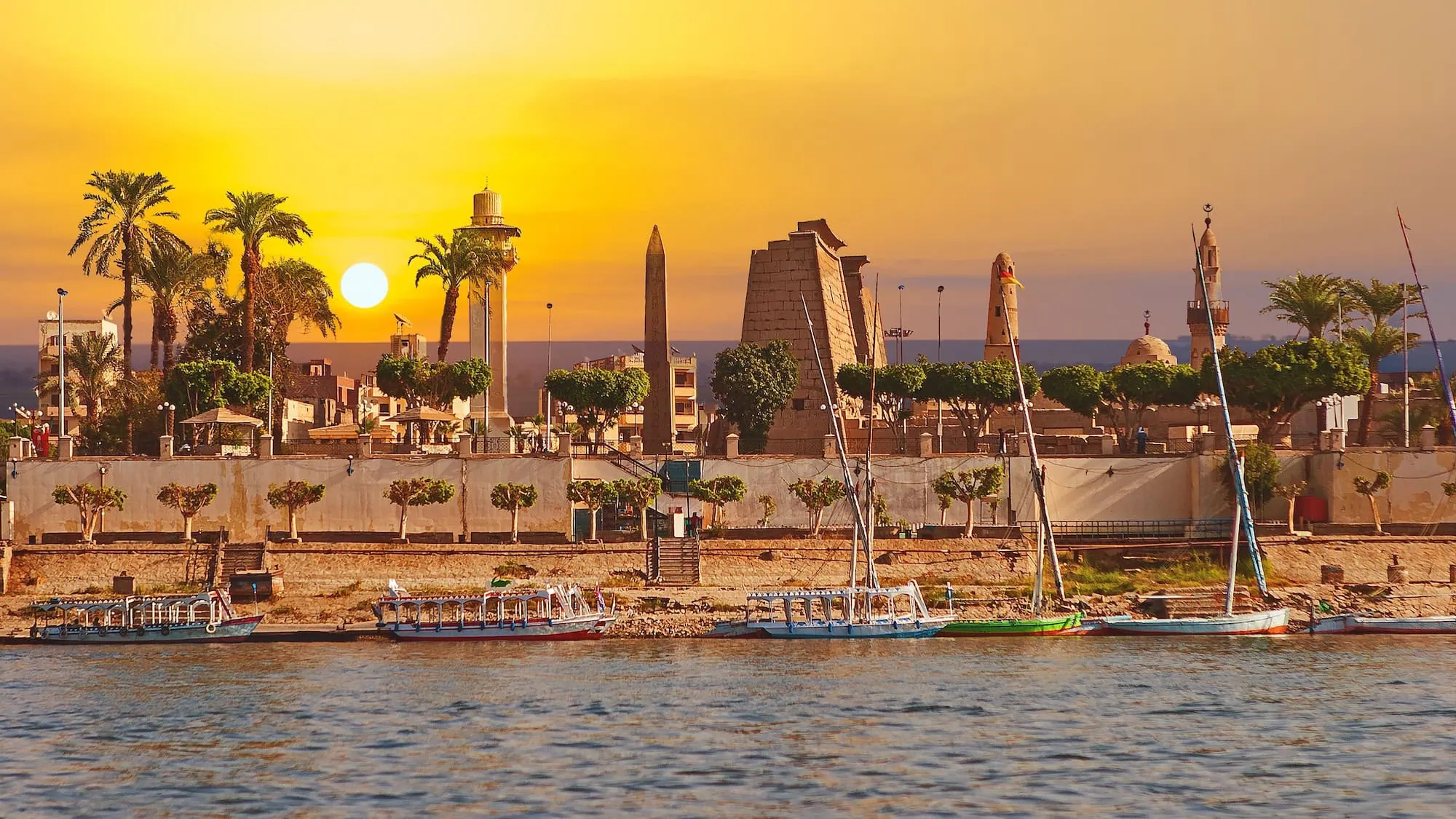
Egypt has captivated travelers for centuries, and combining the country’s most iconic archaeological wonders with a luxurious Nile cruise creates an unforgettable journey.
Our Egypt tours with Nile cruise packages blend the grandeur of ancient monuments with the timeless elegance of sailing along the world’s longest river. From the Great Pyramids of Giza to the temple complexes of Luxor and Aswan, you’ll experience the full breadth of Egypt’s cultural heritage while enjoying the comfort and convenience of expertly planned itineraries — crafted by a team that’s been perfecting Egypt journeys since 1955.
We specialize in creating seamless travel experiences that maximize your time in Egypt while ensuring you don’t miss any of the must-see destinations that make this country so extraordinary.
Table of Contents
Essential Destinations on Every Egypt Nile Cruise Tour
Every remarkable Egypt adventure begins with understanding which destinations deliver the most profound experiences. The classic route combines Cairo’s iconic pyramids and museums with the Luxor-Aswan corridor along the Nile.
This proven itinerary ensures you experience both Egypt’s most famous monuments and its most scenic waterway. Most tours start in Cairo, where you’ll explore the Pyramids of Giza and the Great Sphinx before transitioning to your Nile cruise portion.
Pyramids and Giza Complex
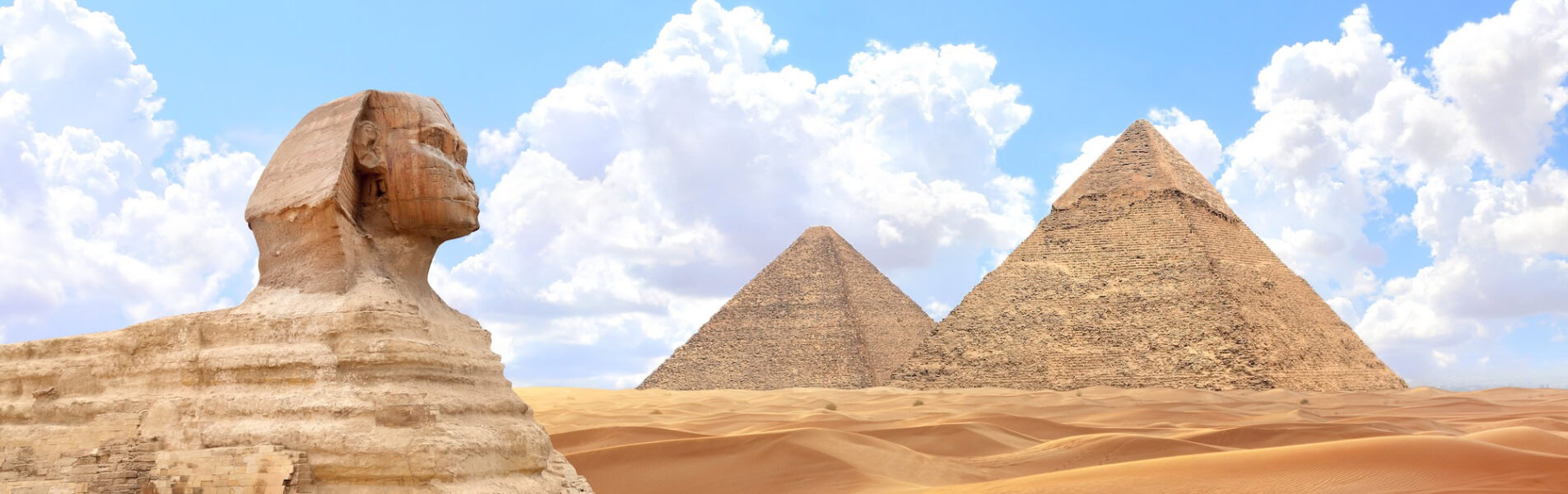
The Great Pyramids remain Egypt’s most visited attraction for good reason. Standing before these ancient wonders, you’ll understand why they’re considered one of the Seven Wonders of the Ancient World. The Great Pyramid of Khufu, built over 4,500 years ago, showcases the incredible engineering capabilities of ancient Egyptian civilization.
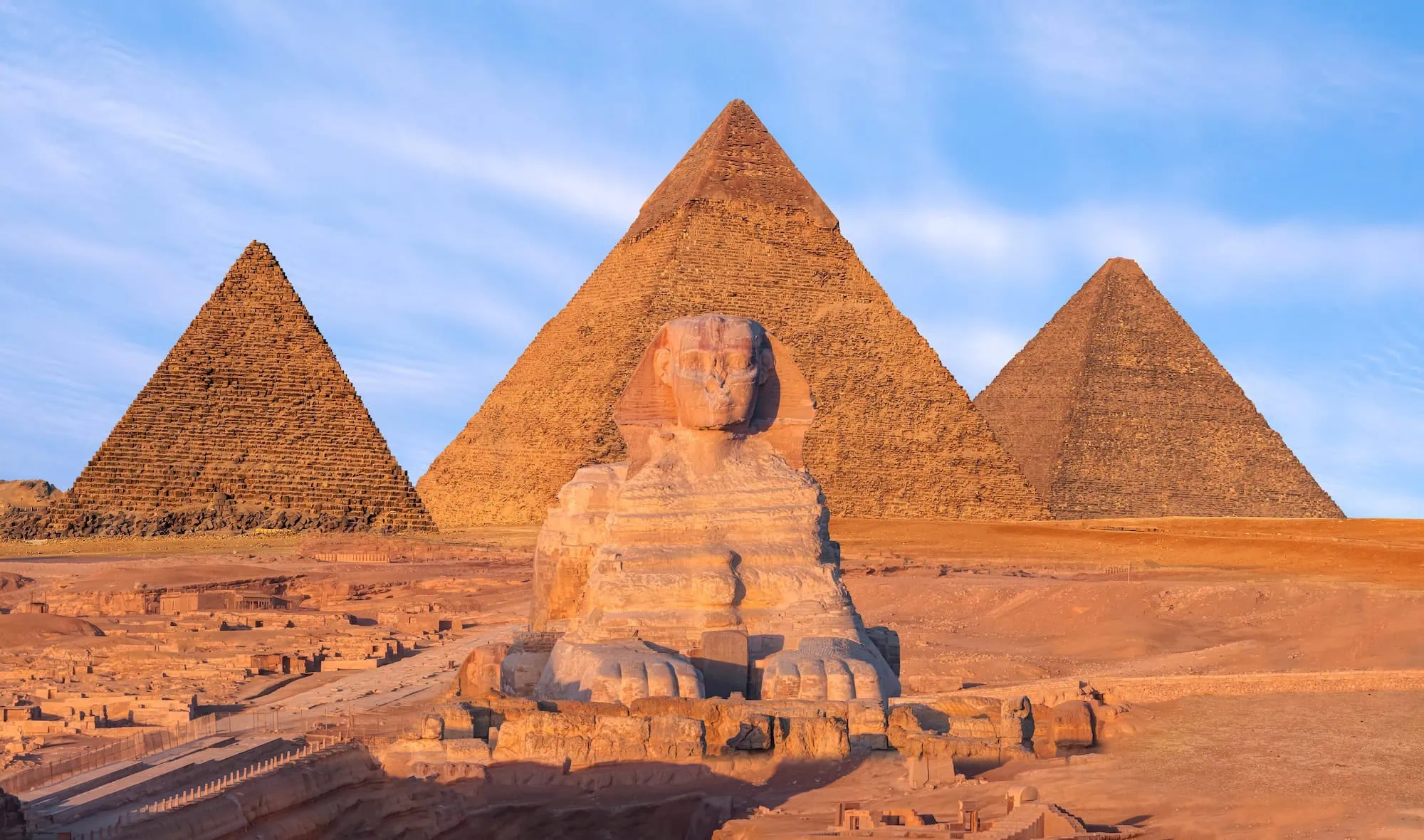
The Great Sphinx guards the complex with its enigmatic presence. Our expert Egyptologist guides provide historical context that brings these monuments to life, explaining the construction methods and religious significance that modern archaeology has uncovered.
Cairo’s Cultural Treasures
The newly opened Grand Egyptian Museum (GEM) houses the world’s most comprehensive collection of pharaonic artifacts, including the full Tutankhamun collection — the golden mask, the inner shrines, and over 5,000 personal items — displayed together for the very first time. Your private Egyptologist guides you through it all at your own pace, while the neighboring Egyptian Museum at Tahrir Square remains a complementary stop for many of our itineraries. Khan el-Khalili bazaar provides authentic shopping experiences where you can purchase traditional crafts and spices.
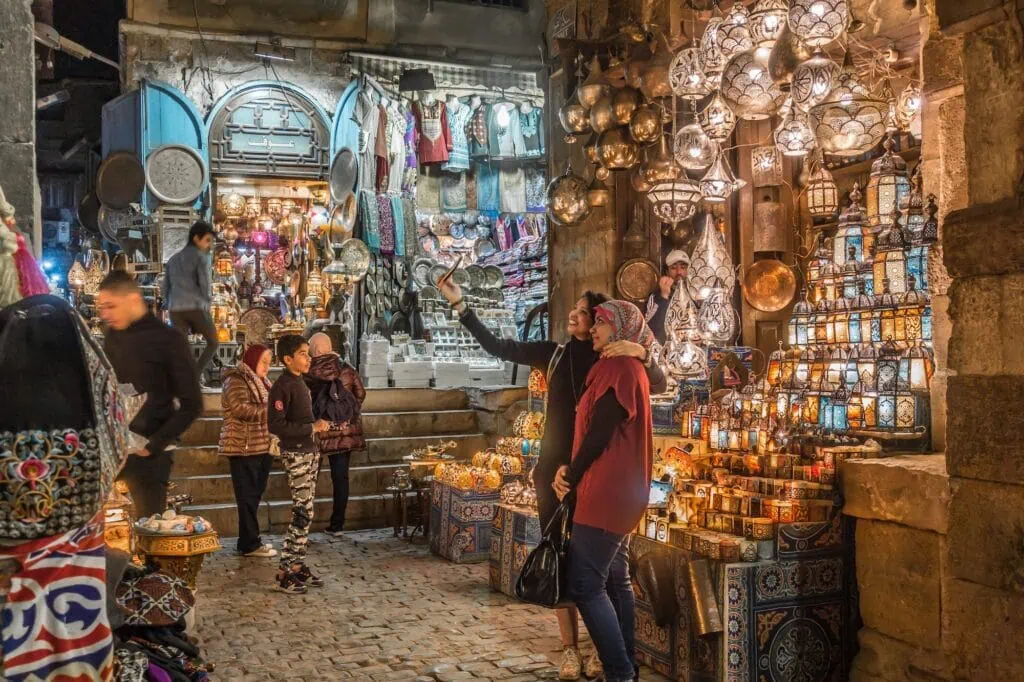
Islamic Cairo’s medieval architecture tells the story of Egypt’s Islamic period through its mosques and madrasas. These neighborhoods showcase how Egypt evolved beyond its pharaonic roots into a center of Islamic learning and culture.
The Nile Cruise Experience
Your floating hotel becomes the perfect base for exploring Upper Egypt’s archaeological treasures. Modern cruise ships offer air-conditioned comfort while maintaining traditional Egyptian hospitality. Full-board dining means you’ll taste authentic Egyptian cuisine prepared by skilled chefs.
Luxury Nile Cruises and Dahabiya Sailings: Two Ways to Sail
The right vessel transforms your Egyptian adventure from good to exceptional, and we offer two distinct ways to sail the Nile, each suited to a different travel style. The standard Nile cruise included in our packages runs 4 days and 3 nights between Luxor and Aswan, taking in the great riverside temples — and you choose the type of vessel that matches how you want to experience it.
Luxury Nile Cruises
Our Luxury Nile Cruises take place aboard refined 5-star vessels carrying between 50 and 150 guests. These ships pair spacious cabins with panoramic river views, sun decks with swimming pools, and elegant dining rooms serving international and Egyptian cuisine. Common areas provide comfortable spaces for socializing or simply watching the timeless scenery pass by your window.
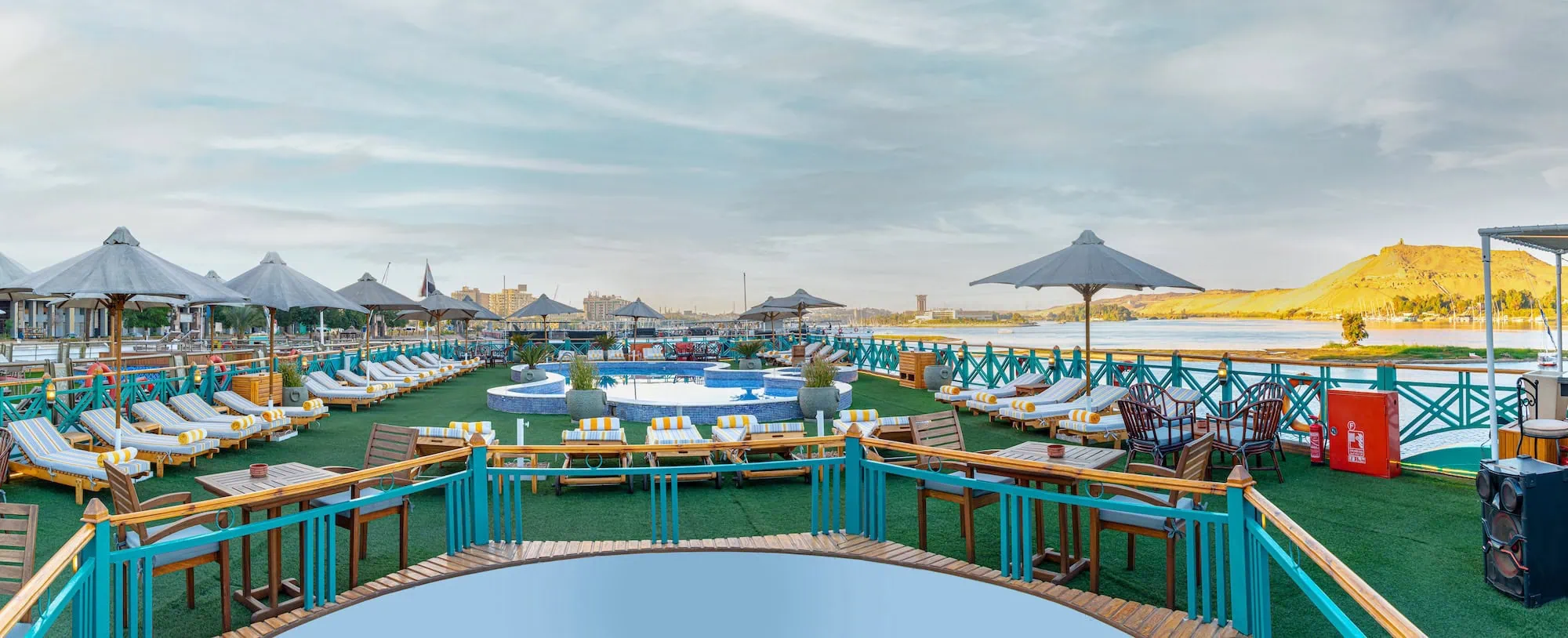
Most ships also include spa services and evening entertainment ranging from traditional Nubian dance performances to classical Egyptian music. Cabins feature modern amenities including air conditioning, private bathrooms, and satellite television.
Dahabiya Nile Cruises
For travelers seeking the most intimate way to sail, our Dahabiya Nile Cruises offer boutique sailing aboard traditional twin-mast vessels carrying just 8 to 16 guests. These smaller ships access quieter stretches of the river inaccessible to larger cruise ships, stopping at small islands, temples and villages most cruises sail past entirely. Onboard you enjoy private decks, gourmet meals using fresh local ingredients, and the rare experience of approaching Egypt’s quiet riverbanks the same way travelers did a century ago.
Your Egyptologist Sails With You
Whichever vessel you choose, your guide is what makes the difference. A professional Egyptologist accompanies all shore excursions, providing expert commentary about each monument and temple complex you’ll explore. On Luxury Nile Cruise sailings, shore excursions operate as small group experiences with fellow passengers from your ship — typically capped at around 12 guests per guide, far smaller than the coach groups you’ll see at the same sites. On Dahabiya sailings, with just 8 to 16 guests aboard, every excursion feels essentially private. Your land-based touring in Cairo, Alexandria, and beyond is fully private throughout — just you, your party, your Egyptologist, and your driver.
Whatever your language, you’ll be matched with an Egyptologist guide who speaks it — English, Italian, Spanish, Portuguese, German, French, and others available on request.
Temple Complexes and Archaeological Wonders
Luxor: The World’s Greatest Open-Air Museum
Luxor concentrates more archaeological treasures in one location than anywhere else on Earth. The city sits on the site of ancient Thebes, which served as Egypt’s capital during the New Kingdom period when pharaonic power reached its zenith.
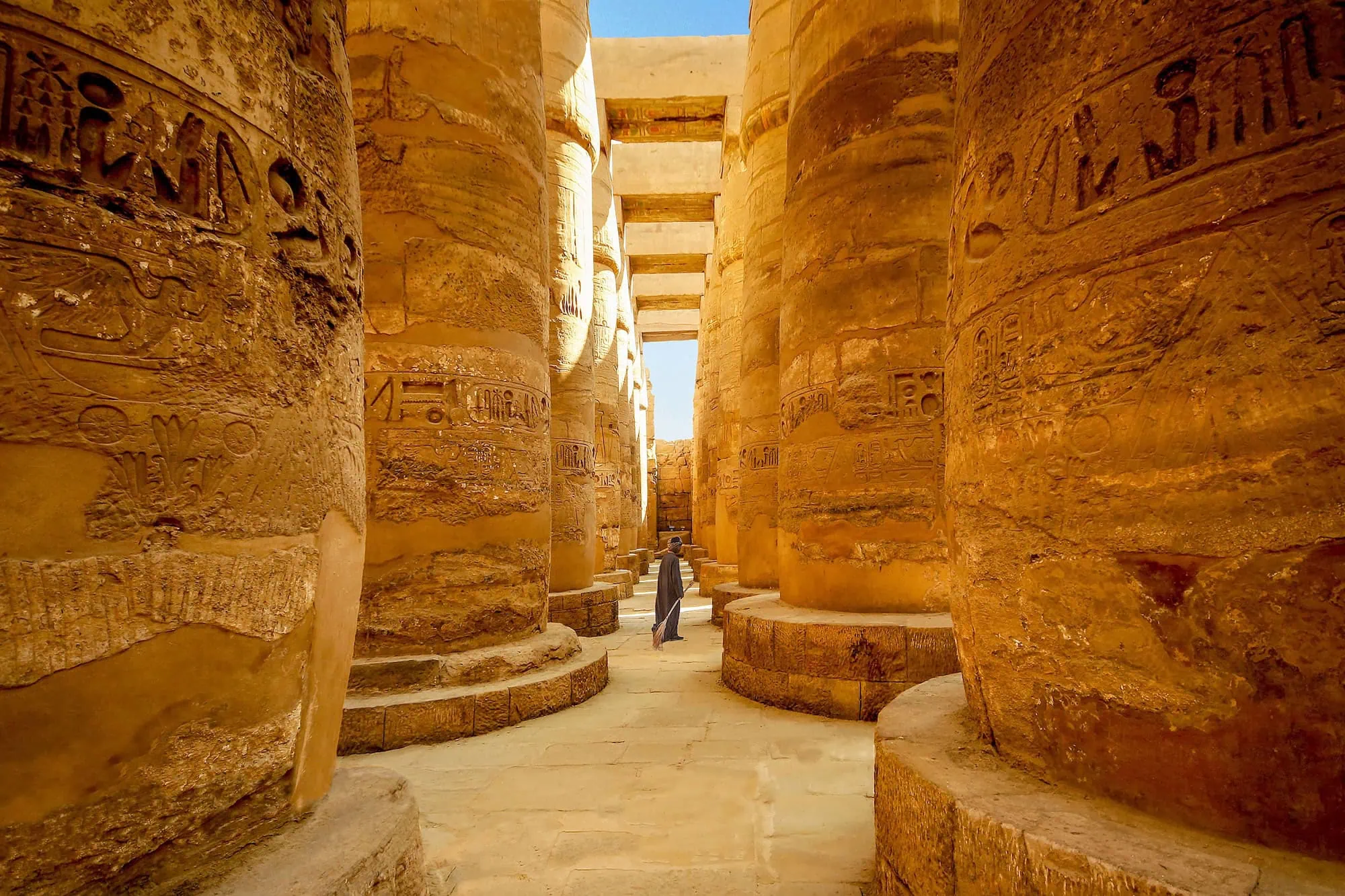
Karnak Temple Complex spans roughly 100 hectares (247 acres) and took more than 2,000 years to complete. The Great Hypostyle Hall contains 134 massive columns, each one intricately carved with hieroglyphic inscriptions. Walking through this forest of stone columns provides an overwhelming sense of ancient Egypt’s architectural ambition.
Luxor Temple connects to Karnak via the Avenue of Sphinxes, a 2.7-kilometer processional route lined with over 1,000 sphinx statues. Recent restoration work has revealed the full length of this ancient pathway, allowing modern visitors to walk the same route used by pharaohs and priests thousands of years ago.
Valley of the Kings
Royal burial sites carved into limestone cliffs hide the tombs of Egypt’s most powerful rulers. Tutankhamun’s tomb (KV62), though smaller than others, contains the pharaoh’s mummy and original wall paintings — the famous golden mask, gilded shrines, and the rest of the burial collection are now displayed together at the Grand Egyptian Museum in Giza. The tomb of Ramesses VI showcases elaborate ceiling decorations depicting the journey through the underworld.
Each tomb tells unique stories through its decorative programs. Hieroglyphic texts provide instructions for navigating the afterlife, while painted scenes show the deceased pharaoh meeting various gods and goddesses. These underground galleries preserve colors and details that have survived for over 3,000 years in Egypt’s dry desert climate.
Aswan’s Nubian Heritage
The High Dam represents modern Egypt’s engineering achievements while creating Lake Nasser, one of the world’s largest artificial lakes. Philae Temple, relocated during the dam’s construction, demonstrates UNESCO’s commitment to preserving cultural heritage. The temple complex dedicated to goddess Isis showcases Ptolemaic architecture at its finest.
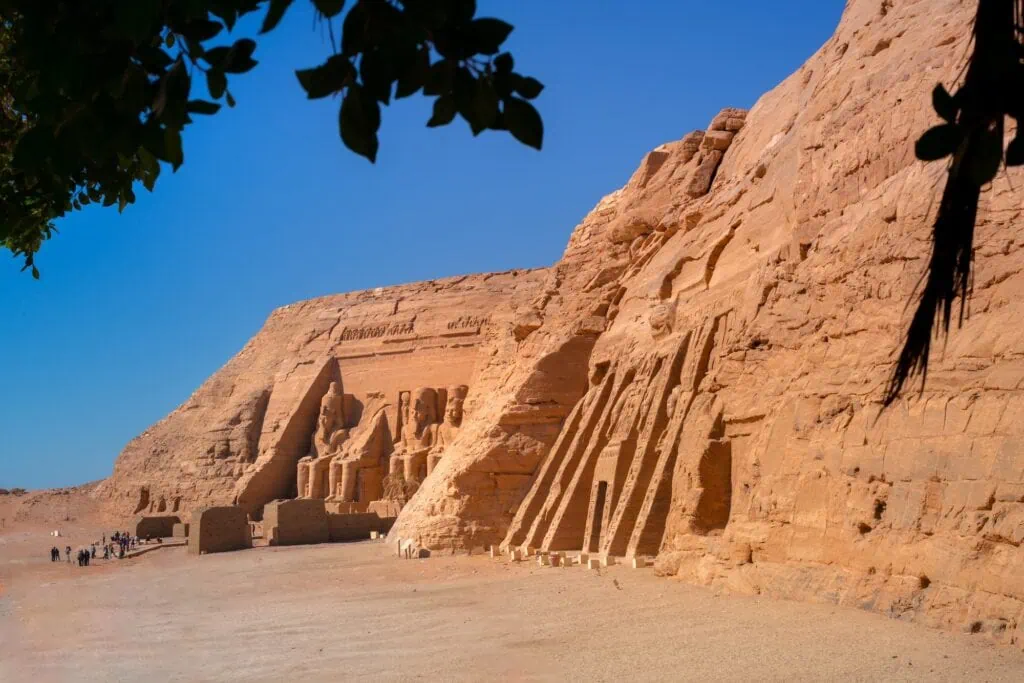
Abu Simbel temples, though requiring an additional excursion, rank among Egypt’s most impressive monuments. Ramesses II carved these massive structures directly into cliff faces as demonstrations of royal power. The twice-yearly solar alignment that illuminates the temple’s inner sanctuary continues to amaze visitors and archaeologists alike.
Planning Your Egypt Tour with Nile Cruise
Timing makes all the difference when experiencing Egypt’s wonders. October through April provides ideal weather conditions, with daytime temperatures ranging from 20–25°C (68–77°F). Summer months can exceed 35°C (95°F), making early-morning starts essential — though our private tours adjust pacing accordingly during warmer months.
Our Egypt tours with Nile cruise packages span anywhere from 7 days for a focused first-time experience up to 14+ days for travelers who want full coverage of Cairo, the Nile, Abu Simbel, Alexandria, the Red Sea, or the Western Desert. The typical standard included Nile cruise runs 4 days and 3 nights between Luxor and Aswan. We also offer 5, 6, 7, and 8-day cruise options on select vessels for travelers wanting more time on the river — from extended one-way sailings to full week round-trip itineraries.
International flights typically arrive at Cairo International Airport, where our VIP meet-and-greet service guides you through immigration, baggage claim, and customs before our team takes care of all ground transportation from there.
Private, air-conditioned vehicles ensure comfortable transfers between hotels, airports, and cruise terminals. Our experienced drivers know Egypt’s road conditions and traffic patterns inside out— and on our private guided tours, your driver and Egyptologist stay with you throughout, allowing flexible scheduling whenever a site captures you longer than planned.
Most travelers, including U.S., U.K., E.U., Canadian, Australian, and many Latin American nationalities, can obtain a 30-day tourist visa on arrival at Cairo Airport for $25 USD, or apply for an e-visa online before departure. Always verify current regulations for your specific nationality before travel, and our Travel Concierge can provide complete documentation guidance.
Our 70+ years of experience in Egyptian tourism allow us to anticipate and address common travel concerns before they affect your vacation. From restaurant recommendations to shopping guidance, our local expertise ensures authentic experiences while maintaining international comfort standards.
Unique Experiences Beyond Standard Itineraries
Hot Air Balloon Adventures
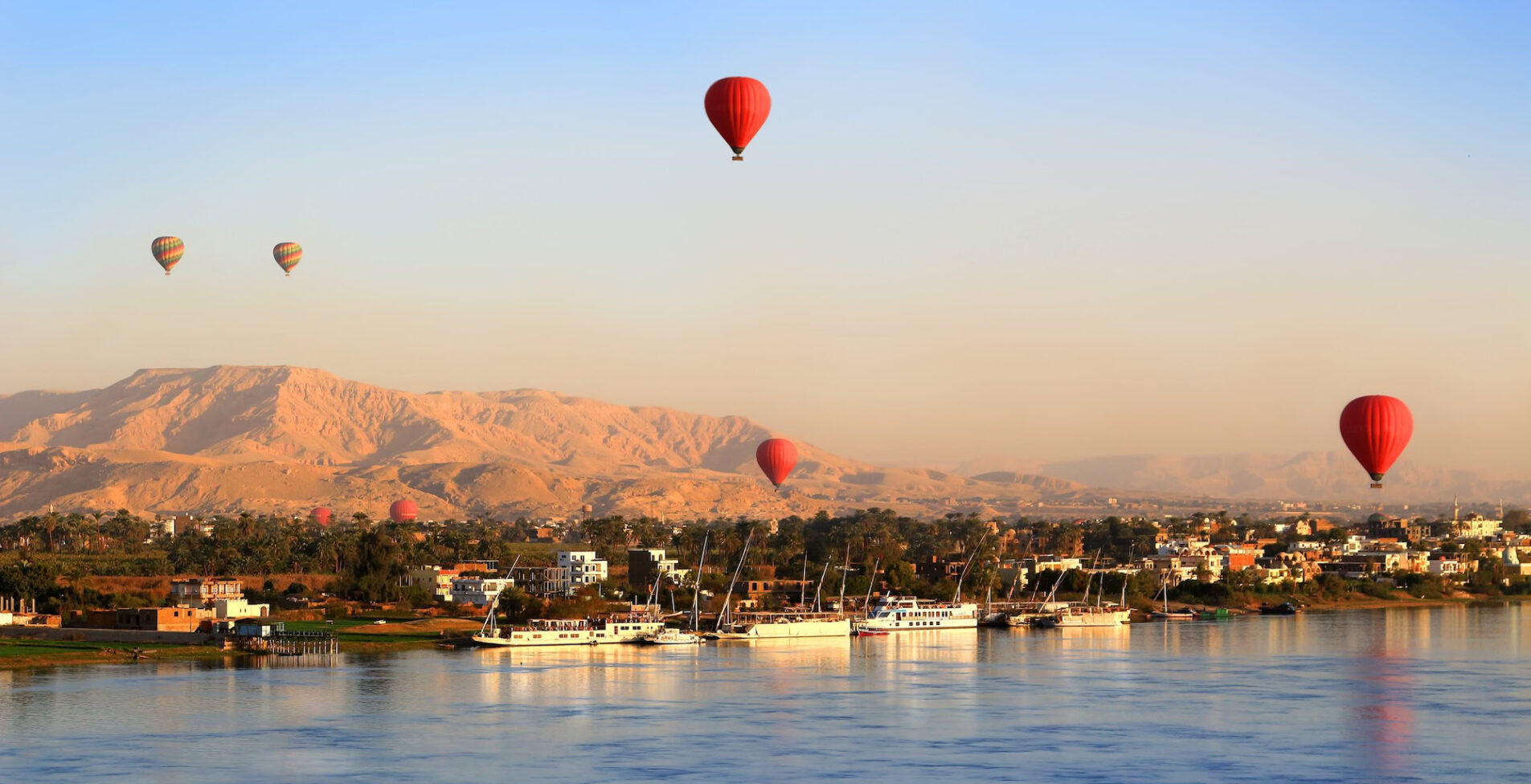
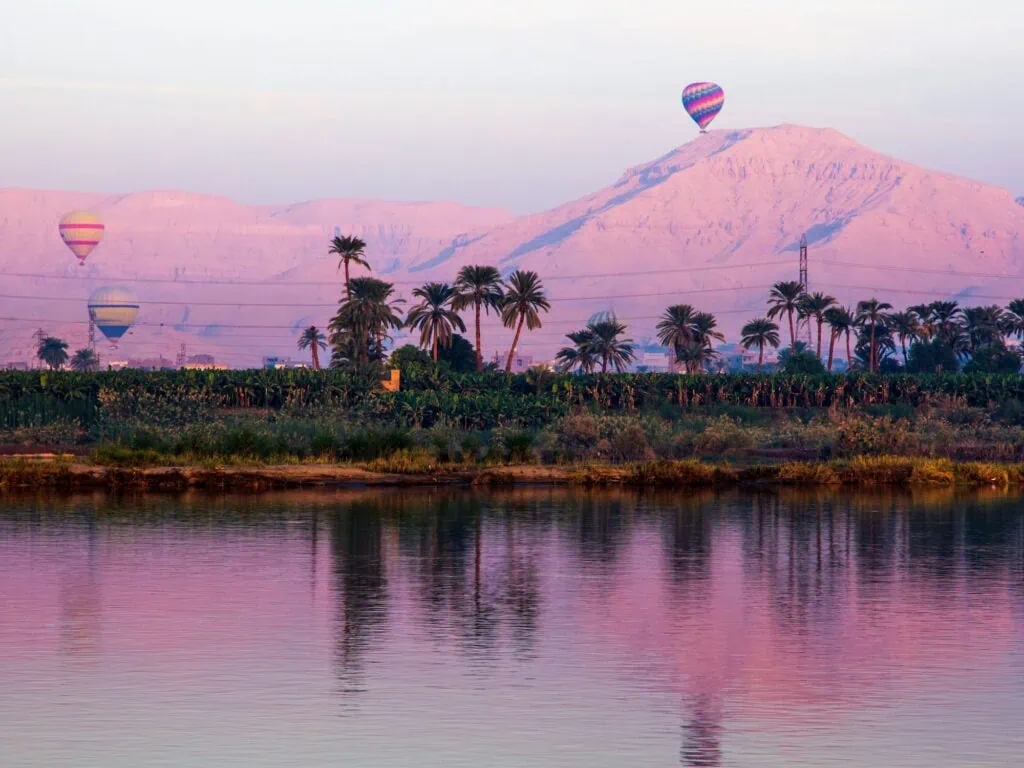
Sunrise balloon flights over Luxor’s West Bank provide unparalleled views of the Valley of the Kings and surrounding desert landscape. These early morning excursions, typically departing at 5:00 am (05:00), offer photographers golden-hour lighting across ancient monuments.
Professional pilots maintain excellent safety records while sharing aerial perspectives that ground-level visits cannot provide.
Lake Nasser Cruises
For travelers wanting to extend the sailing experience further south, Lake Nasser cruises take you beyond Aswan to Abu Simbel and other Nubian monuments otherwise difficult to reach. These itineraries require additional time but reward you with some of Egypt’s most remote and dramatic temple settings — perfect as an extension to a standard Luxor–Aswan cruise.
Multi-Country Extensions
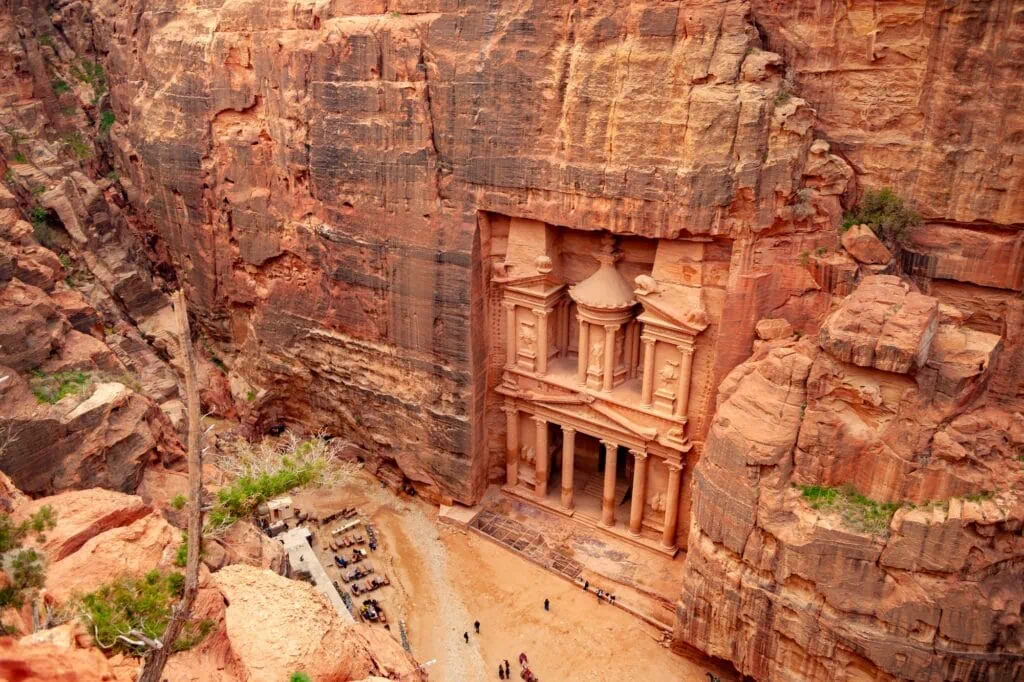
Egypt pairs naturally with several neighboring destinations for travelers ready to extend their journey beyond a single country. Jordan extensions allow visits to Petra, Wadi Rum, and the Dead Sea, creating one of the most popular dual-country itineraries in the region. Morocco adds the imperial cities and Sahara, Turkey brings Istanbul and Cappadocia into the mix, and Greece pairs Egypt’s pharaonic monuments with the cradle of Western civilization. Closer additions like Alexandria’s Greco-Roman heritage or Red Sea beach time are equally easy to weave in.
For travelers planning the most popular pairing, our private Egypt and Jordan tours offer a seamless way to combine two iconic destinations into one unforgettable itinerary.
Practical Considerations for Your Journey
- Egyptian cuisine blends Mediterranean and Middle Eastern flavors with local ingredients, and most cruise ships accommodate dietary restrictions including vegetarian, halal, and kosher requirements when arranged in advance. Hotel restaurants in Cairo and other cities offer international options alongside traditional Egyptian dishes, and our team can recommend specific restaurants in every city your itinerary visits.
- Currency exchange is straightforward throughout Egypt. Egyptian pounds (EGP) are preferred for local purchases, though U.S. dollars and Euros are widely accepted at hotels and tourist sites. ATMs are available in major cities, and credit cards work reliably in upscale establishments — but cash remains essential for small vendors and tipping guides, drivers, and service staff.
- Shopping opportunities range from high-end boutiques in Cairo’s modern districts to traditional bazaars selling handcrafted goods. Papyrus, cotton textiles, alabaster, and precious metals represent authentic Egyptian craftsmanship. Our guides provide trusted shopping recommendations and assist with price negotiations in traditional markets — saving you from the tourist-trap workshops that work on commission.
- Photography policies vary by location, with additional fees required inside certain tombs and at some museums. Most archaeological sites permit general photography, though flash photography and tripods may be restricted. Your Egyptologist will brief you on each site’s specific rules so you never need to guess.
Our award-winning service — recognized by TripAdvisor’s Travelers’ Choice award every year from 2020 through 2026 — includes 24/7 Travel Concierge support throughout your Egyptian journey. Private guides and personal drivers ensure personalized attention while modern vehicles provide reliable transportation. Tailored itineraries accommodate special interests and physical requirements, creating vacation experiences perfectly matched to your preferences.
Ready to Sail the Nile Your Way?
Whether you’re drawn to a refined 5-star Luxury Nile Cruise, an intimate Dahabiya sailing, an extension to Jordan or Morocco, or something else entirely, every Egypt journey we craft starts the same way: with your vision, your dates, and the experiences that matter most to you. No fixed templates, no off-the-shelf compromises — just a fully private itinerary built around exactly what you want.
Share your preferences with a dedicated Travel Concierge, and you’ll have a tailor-made Egypt and Nile cruise itinerary back in your inbox within 1 to 12 hours.
Frequently Asked Questions
Most packages combine guided sightseeing in Cairo (Pyramids of Giza, the Sphinx, the Grand Egyptian Museum, Khan El Khalili) with a 4-day / 3-night Nile cruise between Luxor and Aswan, taking in the great riverside temples.
Standard inclusions are: domestic flights, accommodations across both Cairo and the cruise (full board on the cruise), entrance fees to standard sites, your private Egyptologist guide and personal driver throughout the land portion, airport meet-and-greet, and 24/7 support.
International flights, tipping, optional add-ons (interior pyramid access, Abu Simbel, hot air balloon over Luxor, Nefertari’s tomb, Lake Nasser cruise, Red Sea segments), and some meals are quoted separately.
Each tour itinerary on the site lists the precise inclusions and exclusions for that specific package — those are the authoritative reference, and your Travel Concierge will confirm everything in your final itinerary.
Seven days is the realistic minimum to combine Cairo with a 4-day Nile cruise without rushing. Eight to ten days is the comfortable sweet spot — Cairo properly, the standard Luxor–Aswan cruise, and breathing room for travel days. Twelve days or more opens up Abu Simbel as a flight day or Lake Nasser cruise, Alexandria, the Red Sea, or a multi-country extension to Jordan, Dubai, or beyond.
Two genuinely different ways to sail the same river. Luxury Nile Cruises are refined 5-star vessels carrying 50 to 150 guests, with panoramic cabins, sun decks with pools, elegant dining, and evening entertainment. They’re ideal if you want the comfort, amenities, and social atmosphere of a proper river-cruise experience. Dahabiya Nile Cruises are traditional twin-mast sailing vessels carrying just 8 to 16 guests — quieter river stretches inaccessible to large ships, gourmet meals from fresh local ingredients, no engine noise. They suit travelers who want intimacy and slowness over amenities.
On Luxury Nile Cruises, shore excursions run as small group experiences (around 12 guests per Egyptologist), shared with fellow ship passengers. Fully private excursions can be arranged on request at additional cost. On Dahabiyas, the boat itself is small enough that excursions feel essentially private.
All your land-based touring in Cairo, Luxor, Aswan, and across any extension destinations is fully private throughout: just your party plus your guide and driver.
Both routes visit the same temples (Karnak, Luxor Temple, Edfu, Kom Ombo, Philae) and the experience is equally rewarding in either direction. Logistically, the route depends on which way the cruise schedule runs in your booking week — both are common. Most travelers don’t notice or care about direction; what matters is the time on the river itself.
The standard 4-day / 3-night Luxor–Aswan cruise is included as part of most Egypt tour with Nile cruise packages on the site.
We also offer 5, 6, 7, and 8-day cruise options on select vessels — for travelers wanting extra time on the river, deeper site visits, or full round-trip itineraries.
The 4-day standard works well when the cruise is one segment of a broader Egypt trip (Cairo + cruise + Abu Simbel). The longer options work best when the cruise is the centrepiece of the trip.
Yes. There are three options.
The fastest is a flight day from Aswan (45 minutes each way, ideal if your time is tight).
The most cost-effective is a small-group road convoy from Aswan (3-hour drive each way through the Western Desert, departing pre-dawn, with the standard small group format used for the road option).
The most immersive is a Lake Nasser cruise extension (a 3- or 4-night cruise from Aswan to Abu Simbel and back, taking in the relocated Nubian temples along the way). The flight adds 1 day to your trip, the road option adds 1 day, and the Lake Nasser option adds 3 to 4 days.
Your Travel Concierge will recommend the right option based on your budget, pacing, and broader itinerary.
Yes. Sunrise hot air balloon flights over Luxor’s West Bank are one of the most popular optional add-ons. Flights launch around 30 minutes before dawn (Luxor’s wind conditions only allow safe flying at sunrise) and last 45–60 minutes, with the Valley of the Kings, Hatshepsut’s temple, the Colossi of Memnon, and the green Nile floodplain spread out below.
Yes. The most popular pairings are Jordan (Petra, Wadi Rum, the Dead Sea), Dubai (Burj Khalifa, desert safari, Abu Dhabi), Morocco (Marrakech, the Sahara), Turkey (Istanbul, Cappadocia), Greece (Athens and the islands), and Saudi Arabia (AlUla and Hegra). Two weeks or more is the realistic window for a proper multi-country extension. Mention which countries interest you and your Travel Concierge will model durations and pricing across the options.
October through April offers ideal weather conditions, with daytime temperatures of 20–25°C (68–77°F) and cool, comfortable evenings. Summer months can exceed 35°C (95°F), making outdoor sightseeing genuinely difficult, though our private tours adjust pacing where needed.
The peak weeks within the high season are Christmas/New Year and Easter — pricing reflects demand and the historic anchor properties + best cruise cabins sell out months ahead. Shoulder seasons (October–November and March–April) offer the best balance of weather, availability, and pricing.
For trips during the high season (October–April), three to four months in advance is the comfortable window. For trips during peak weeks (Christmas/New Year and Easter), six months is more realistic — the historic anchor properties on the Egypt side (Sofitel Legend Old Cataract, Sofitel Winter Palace, Marriott Mena House) and the best cruise cabins sell out first. Last-minute bookings inside four weeks of the high season are sometimes possible but with compromises on hotel and cruise availability.
Yes, both. The cruise format works particularly well for older travelers who appreciate moving between major sights without packing and unpacking, and for families with kids 6 and up (the Tutankhamun gallery at GEM is a strong hit, and the cruise pacing builds in downtime between temple visits). We can adjust pacing, hotel locations, and cabin selections to match mobility needs and family dynamics during planning.
Modest clothing covering shoulders and knees is recommended for temple visits and required at mosques. Comfortable walking shoes with proper grip are essential — temple flooring is uneven and often sandy. Onboard the cruise, dress is smart-casual for dinners on Luxury Nile Cruises, fully relaxed on Dahabiyas. Light layers help with the contrast between hot afternoon temple visits and cooler evenings on the sun deck.
Yes, across both the cruise and your hotel stays. Egyptian cuisine has strong vegetarian roots (foul, koshari, vine leaves, baba ghanoush, dozens of vegetable dishes), and hotels and cruises accommodate vegetarian, vegan, gluten-free, halal, kosher, and most other dietary needs with advance notice. Mention specifics during planning so your Travel Concierge can flag them with each property and the cruise kitchen.
Tipping conventions in Egypt: roughly $5–8 USD per person per day for cruise crew (collected as a single tip at the end of the cruise), $20–40 USD per day total for your private Egyptologist guide and driver combined (covering both), and $1–2 USD for small services (porter, restroom attendant, etc.).
Most travelers, including U.S., U.K., E.U., Canadian, Australian, and many Latin American nationalities, can obtain a 30-day Egypt tourist visa on arrival at Cairo Airport for $25 USD, or apply for an e-visa online before departure. Always verify current regulations for your specific nationality before travel, and our Travel Concierge can provide complete documentation guidance.
Whatever your language, you’ll be matched with an Egyptologist guide who speaks it — English, Italian, Spanish, Portuguese, German, French, and others available on request.
Tourist areas in Egypt (Cairo, Luxor, Aswan, the Nile cruise route, Hurghada, Sharm El Sheikh) are well-policed and have strong safety records. Our 24/7 worldwide customer service is on call throughout your trip, and your dedicated Travel Concierge stays your point of contact from booking through return home. Cruise vessels operate to international safety standards, and our cruise partners are operators we’ve worked alongside for decades.
Three things.
First, depth: 70+ years of operational experience in Egypt, our own fleet of vehicles, private Egyptologist guides who speak your language, and the relationships with cruise operators that come with running this market since 1955.
Second, the trip is built as one continuous experience — coordinated flights, coordinated transfers, one Travel Concierge, one point of contact from first email to return home.
Third, it’s genuinely customisable: the cruise tier (Luxury vs Dahabiya), the cabin category, the duration (4 days vs 7 nights), the add-ons (Abu Simbel, balloon, Nefertari, Lake Nasser, Red Sea), and the multi-country extensions are all designed around you, not slotted into a pre-built template.
Design Your Custom Tour
Explore Egypt your way by selecting only the attractions you want to visit