Ancient Temples in Egypt
Journey into a land where myth, power, and artistry come alive through Ancient Temples in Egypt. These monumental sanctuaries reveal the grandeur of pharaohs, the devotion of ancient worshippers, and the stories carved in stone—inviting you to experience the timeless spirit of Egypt’s most awe-inspiring sacred sites.
Walk Through the Sacred Gateways of Egypt’s Past
Explore the Ancient Temples of Egypt
Ancient Temples in Egypt: The Ultimate Traveler’s Guide
Egypt’s ancient temples remain among humanity’s most extraordinary architectural achievements.
These sacred structures served far more than religious purposes in ancient Egypt. They functioned as economic powerhouses, centers of learning, and political symbols that reinforced pharaonic authority for over three millennia. Each temple complex tells a story of divine connection, architectural mastery, and cultural sophistication that continues to captivate visitors from around the world.
We’ll guide you through the most significant temples featured on classic Egypt tours, highlighting their remarkable features and what makes each one unique. From the massive temple complex at Karnak to the rock-carved magnificence of Abu Simbel, discover how these monuments shaped one of history’s greatest civilizations.
Table of Contents
Divine Purpose and Sacred Functions
Ancient Egyptian temples weren’t merely places of worship – they were considered literal homes of the gods on earth. Each morning, priests performed sacred rituals to awaken the deities, bathe their statues, dress them in fine linens, and present offerings of food and incense.
Sacred Architecture Reflecting Universe
The temple layout mirrored Egyptian cosmology perfectly. Massive pylons at the entrance represented the horizon where the sun rose each day. Hypostyle halls with towering columns symbolized the primeval marsh from which creation emerged.
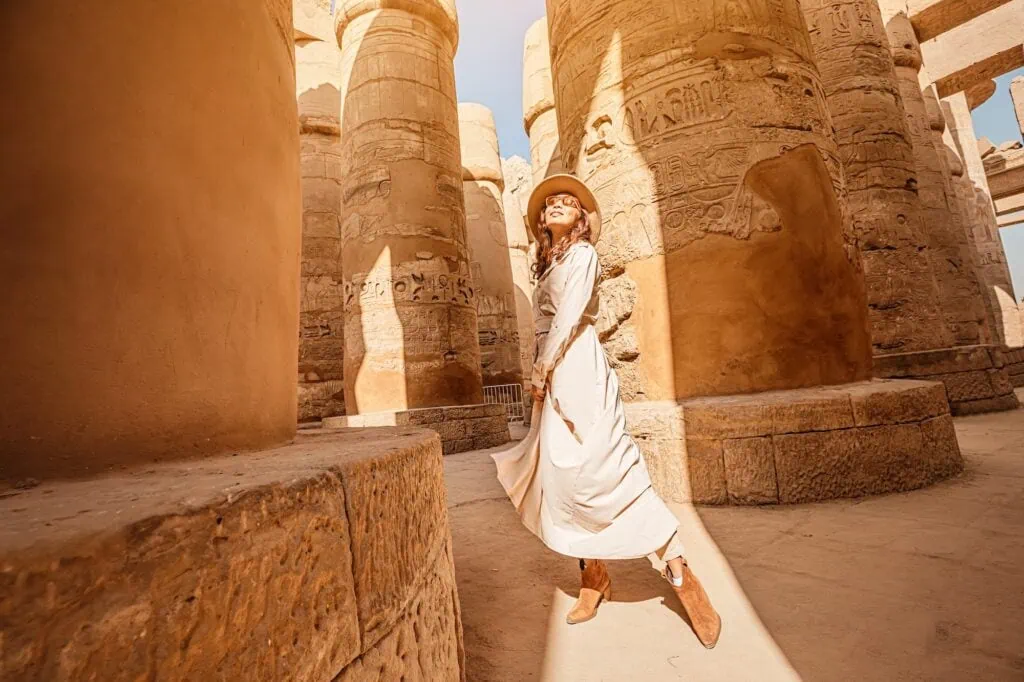
The innermost sanctuary, housing the god’s statue, remained the holiest space accessible only to high priests and pharaohs.
Daily Rituals and Duties
Temple priests maintained strict schedules for divine service. They purified themselves in sacred lakes before entering holy areas.
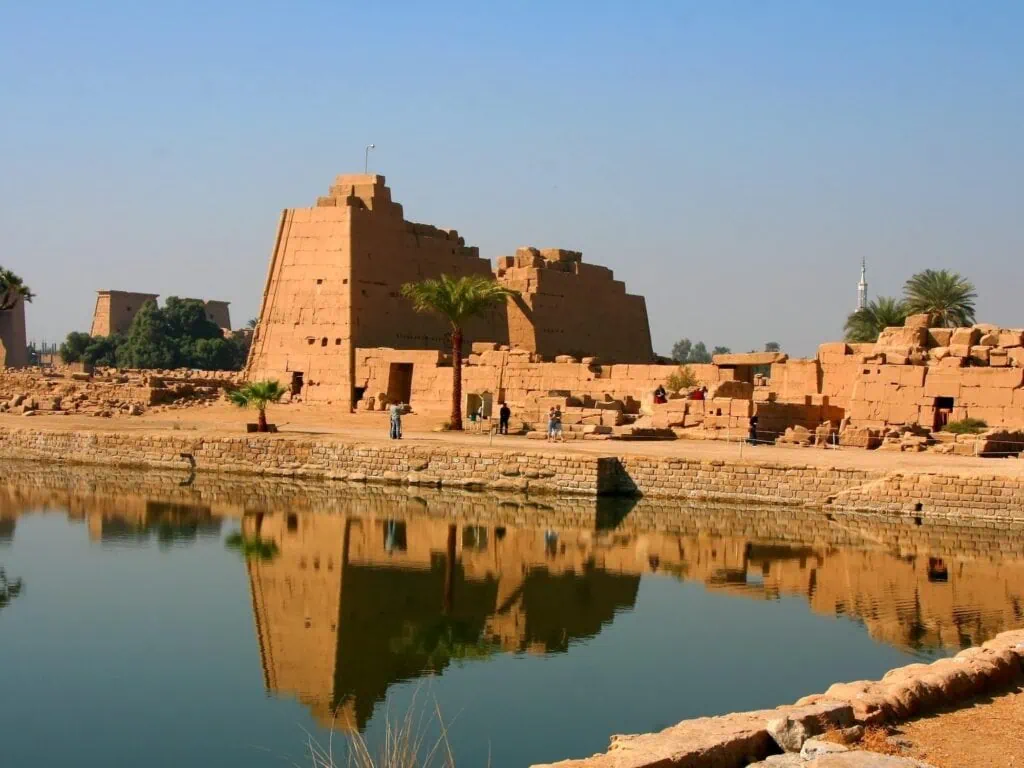
The daily ritual included opening the naos (shrine), presenting fresh food offerings, burning incense, and reciting prayers. These ceremonies ensured the god’s continued protection of Egypt and maintained cosmic order.
Economic and Educational Centers
Beyond religious functions, temples operated as major economic institutions. They owned vast agricultural lands, employed thousands of workers, and controlled trade routes. The famous “House of Life” attached to many temples served as libraries, scriptoriums, and medical schools where scribes copied important texts and trained new generations of priests.
Karnak Temple: Egypt’s Greatest Monument
For over 1,500 years, pharaohs expanded and embellished Karnak Temple, creating the largest religious complex ever built. This vast site covers 200 acres and contains multiple temples, chapels, pylons, and other buildings dedicated primarily to the Theban god Amun-Ra.
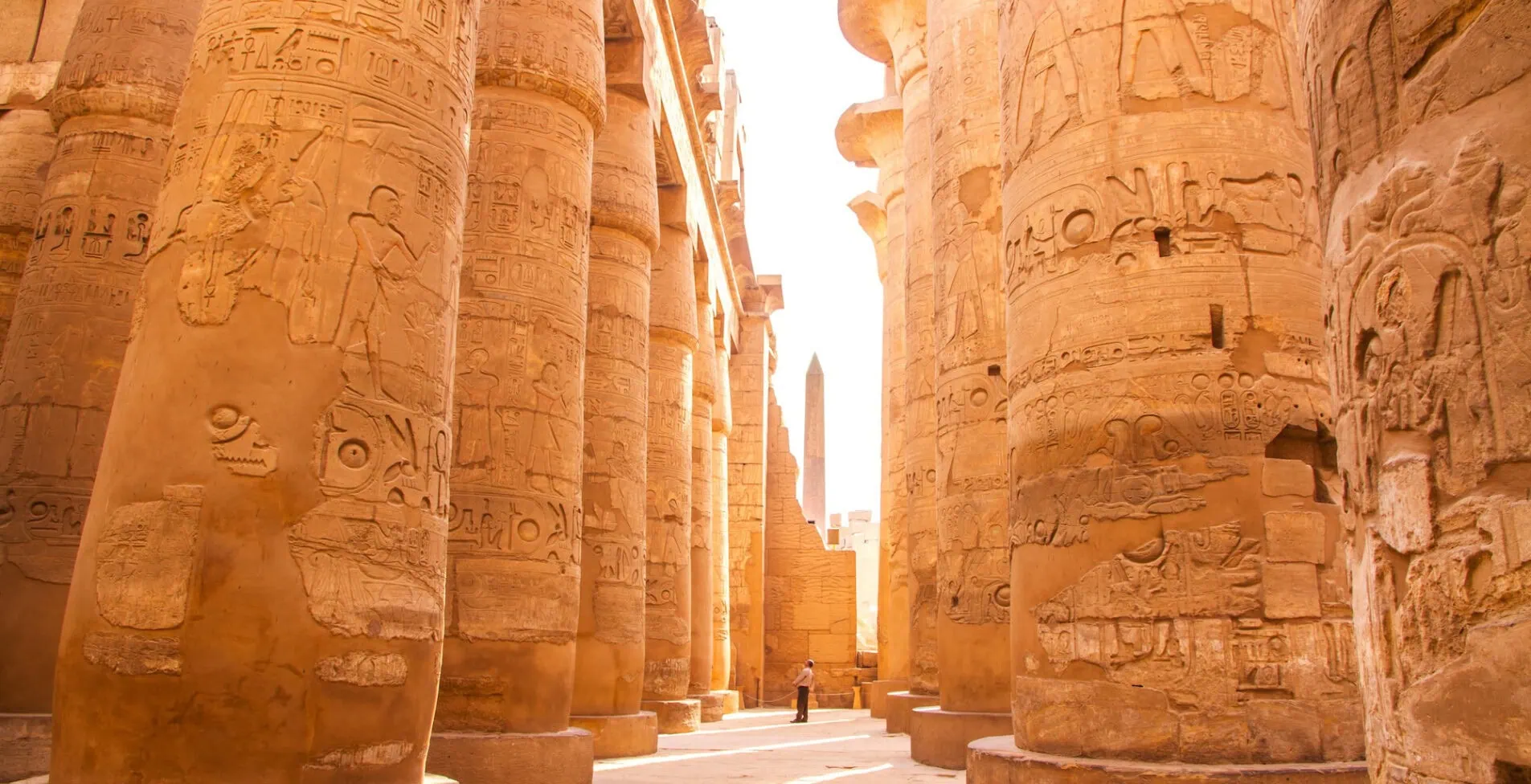
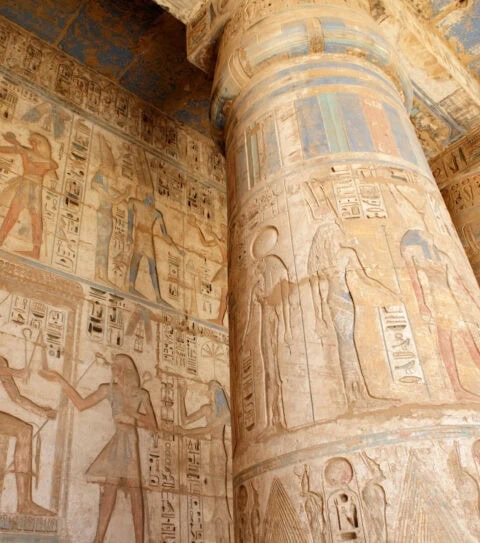
The Great Hypostyle Hall stands as Karnak’s most breathtaking feature. One hundred thirty-four massive sandstone columns support the roof, with the twelve central columns reaching 69 feet high. Walking between these towering pillars creates an almost overwhelming sense of the divine power ancient Egyptians attributed to their gods. Intricate hieroglyphic carvings cover every surface, depicting religious scenes and royal achievements.
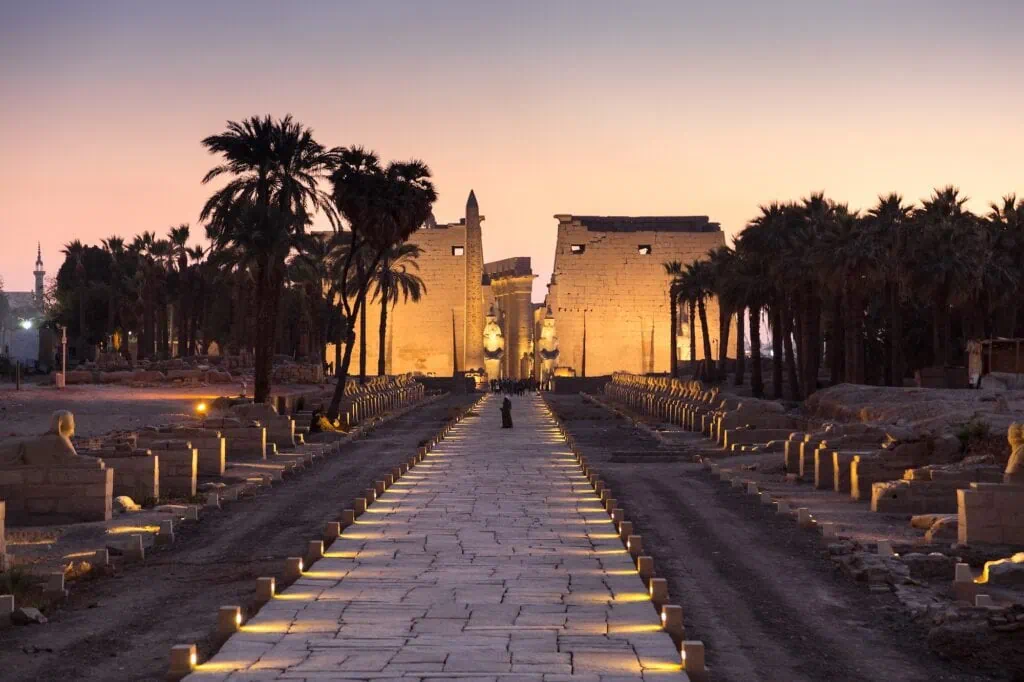
Avenue of Sphinxes once connected Karnak to Luxor Temple, stretching nearly two miles.
Recent restoration efforts have revealed much of this ancient processional route where sacred barque ceremonies carried the god Amun between temples during major festivals. The Sacred Lake provided water for purification rituals and remains one of the largest temple lakes in Egypt.
Sacred Barque Sanctuary
Deep within Karnak’s inner chambers lies the barque sanctuary where Amun’s sacred boat rested between ceremonial journeys. These elaborately decorated wooden vessels, covered in gold and precious stones, carried the god’s statue during religious processions. The sanctuary’s granite walls preserve detailed reliefs showing these magnificent ceremonies.
Luxor Temple: Where Pharaohs Became Divine
Unlike most Egyptian temples dedicated to specific gods, Luxor Temple served a unique purpose in legitimizing royal power. Built primarily by Amenhotep III and Ramesses II, this temple hosted the annual Opet Festival where pharaohs renewed their divine kingship through sacred rituals with Amun-Ra.
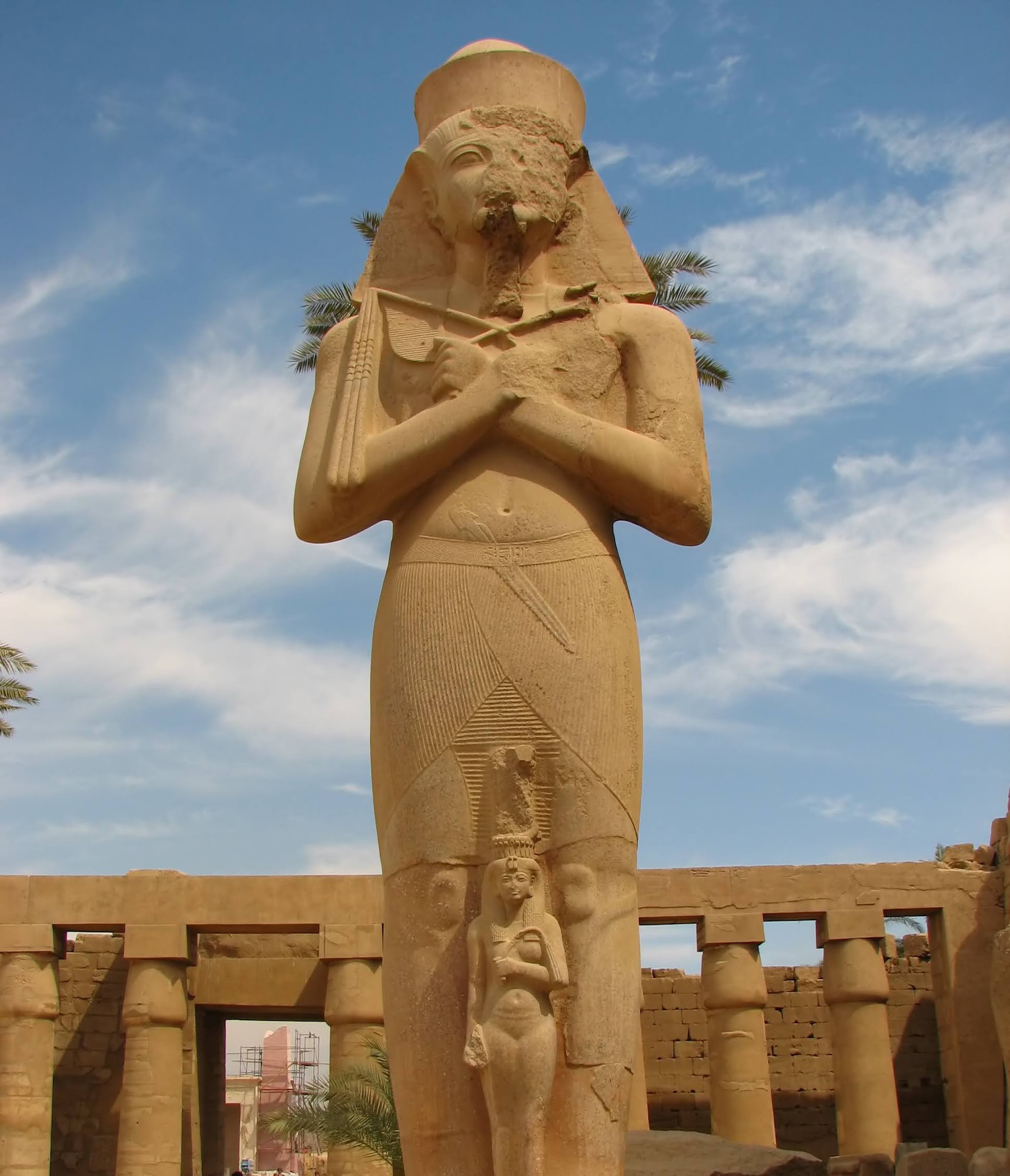
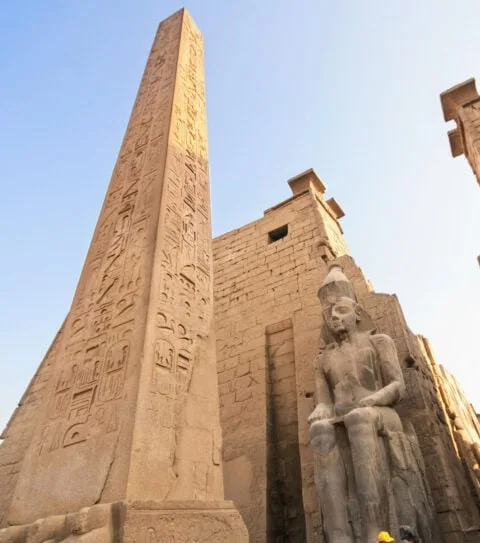
The temple’s entrance features two massive seated statues of Ramesses II and a single remaining obelisk (its twin now stands in Paris’s Place de la Concorde). Beyond the entrance court, the colonnade of fourteen enormous papyrus-bud columns leads to inner chambers where the most sacred ceremonies took place.
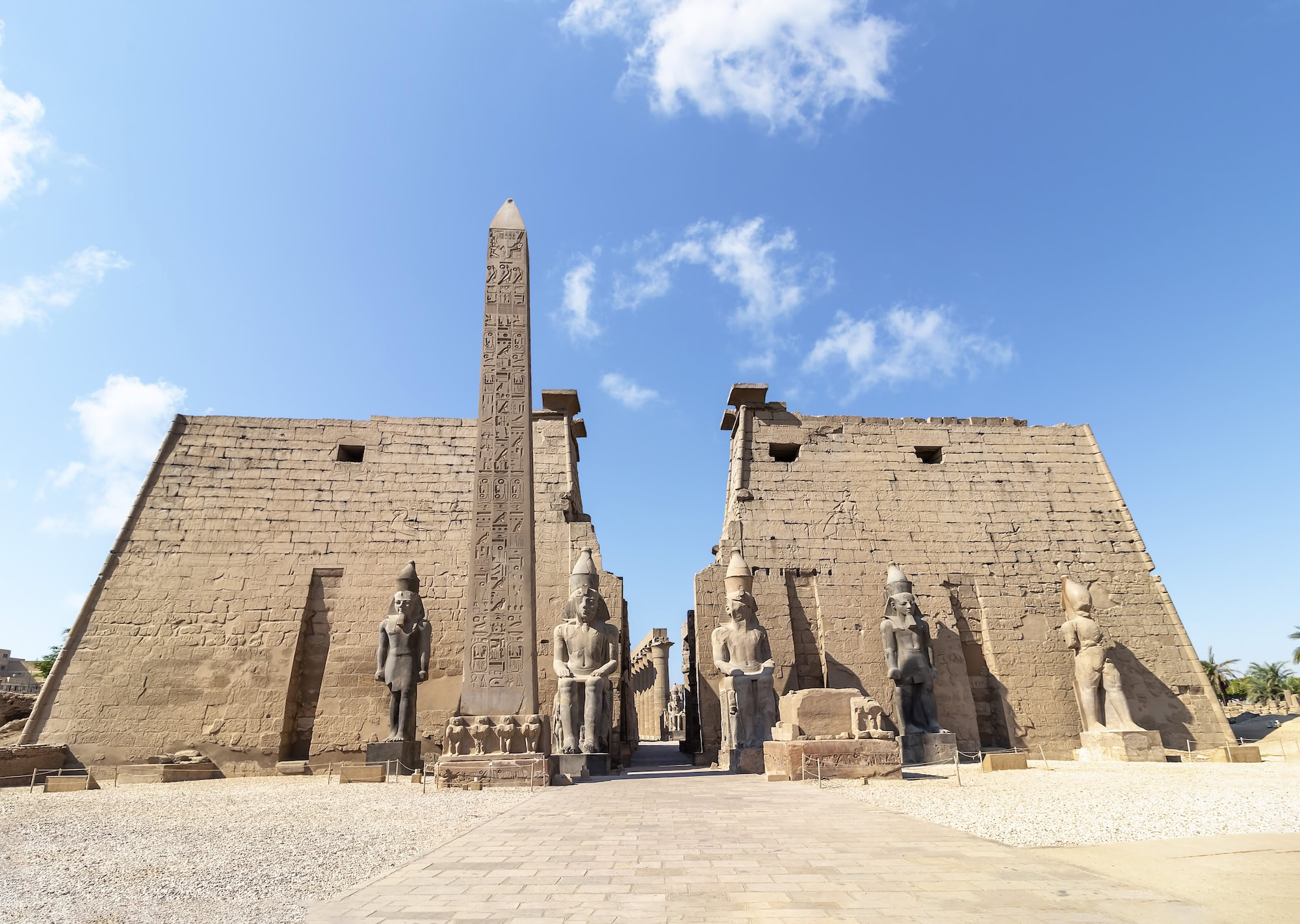
Luxor Temple demonstrates remarkable architectural evolution. Christian churches were built within the temple during the Roman period, and later Islamic structures added another layer to this sacred site. This continuous religious use spanning over two millennia makes Luxor unique among ancient Egyptian monuments.
Roman frescoes still adorn the walls in some chambers, showing how different cultures adapted these ancient spaces for their own religious practices.
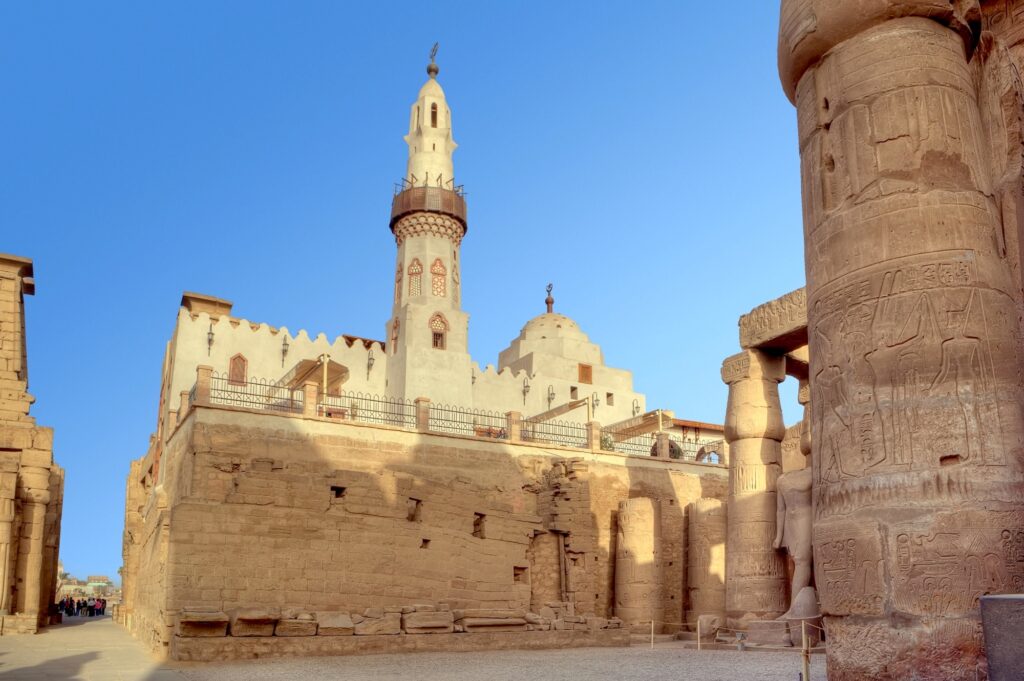
The mosque of Abu al-Haggag, built on top of the temple in the 13th century, continues active worship today.
Abu Simbel: Monument to Eternal Power
Carved directly from solid sandstone cliffs along the Nile, Abu Simbel represents the ultimate expression of pharaonic ambition. Ramesses II commissioned these twin temples to demonstrate Egyptian power to Nubian neighbors and immortalize his own divine status. The Great Temple’s facade features four colossal seated statues of Ramesses, each standing 65 feet tall.
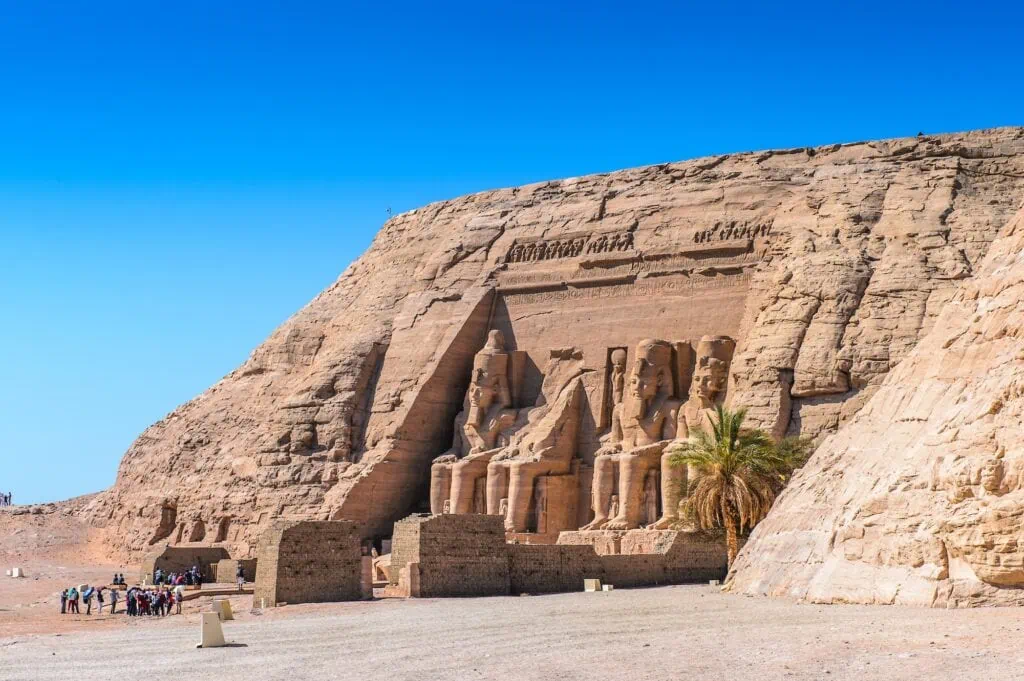
Twice yearly, on February 22nd and October 22nd, sunlight penetrates the temple’s inner sanctuary to illuminate statues of Ramesses II and the gods Ra-Horakhty and Amun. This precise astronomical alignment demonstrates the sophisticated engineering knowledge ancient Egyptian architects possessed.
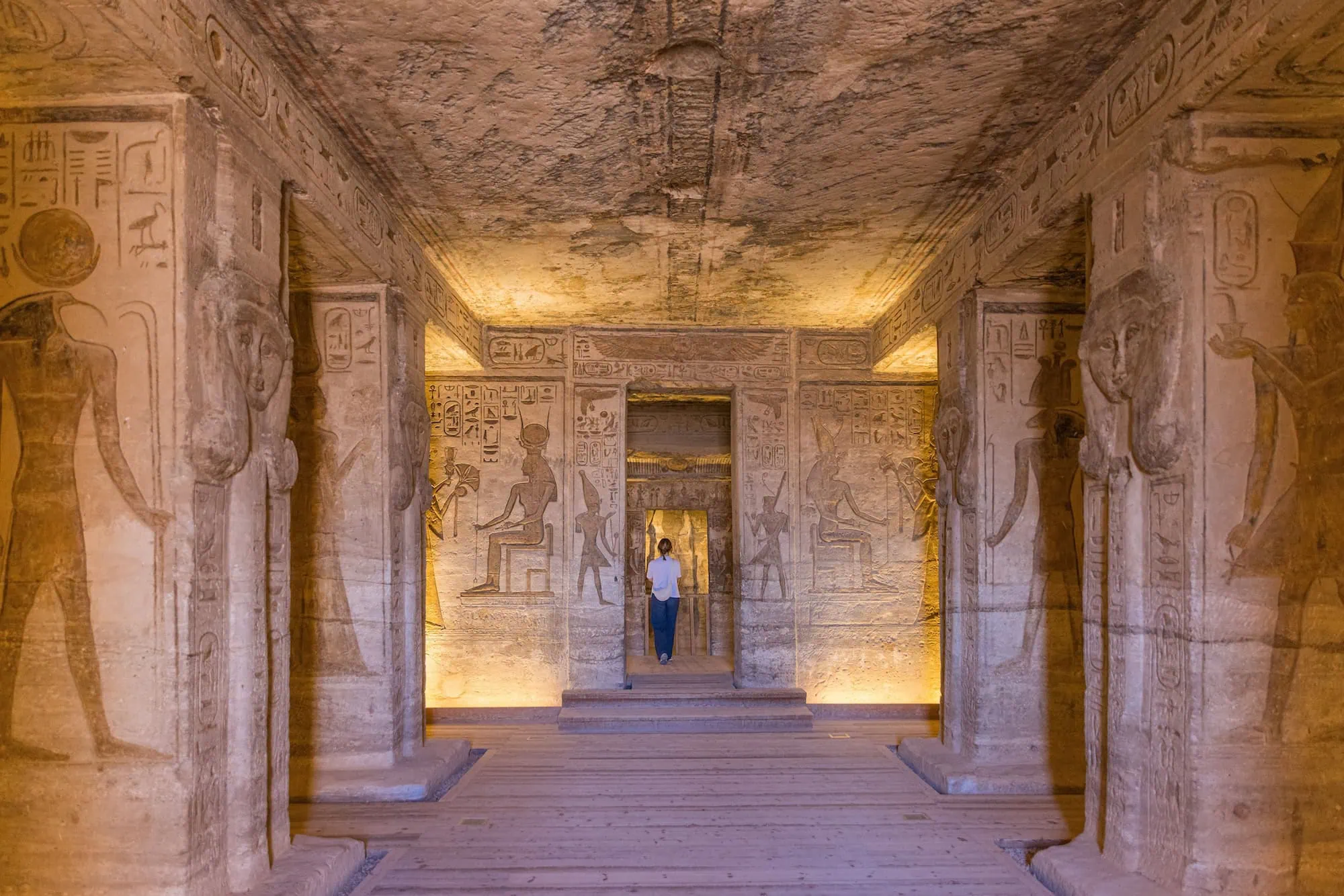
The temple’s interior corridors extend 185 feet into the cliff face, decorated with detailed reliefs depicting Ramesses’s military victories, particularly the Battle of Kadesh against the Hittites. These dramatic scenes served both artistic and propagandistic purposes, reinforcing the pharaoh’s role as Egypt’s divine protector.
Smaller Temple of Nefertari
Adjacent to Ramesses’s temple stands a smaller sanctuary dedicated to his beloved queen Nefertari and the goddess Hathor. Six standing statues guard the entrance – four of Ramesses and two of Nefertari, depicted at equal height, which was extremely rare in Egyptian art and demonstrates the queen’s extraordinary status.
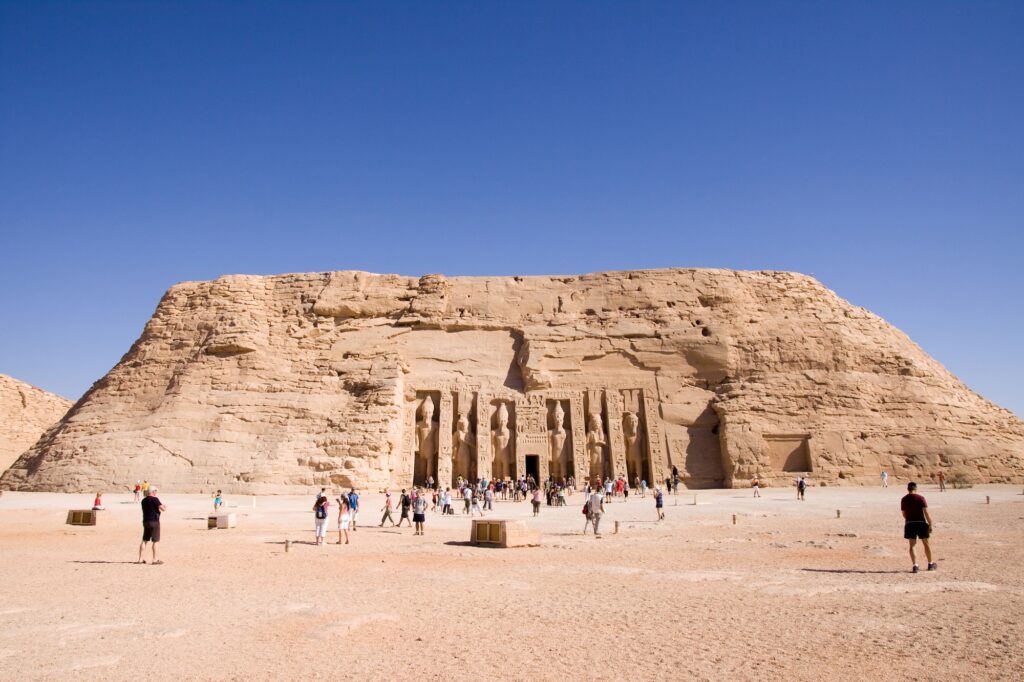
The rescue operation of Abu Simbel in the 1960s, when rising waters from the Aswan High Dam threatened these monuments, represents one of archaeology’s greatest achievements. UNESCO coordinated the careful dismantling and reconstruction of both temples on higher ground, preserving them for future generations.
Philae Temple: Island Sanctuary of Isis
Philae Temple holds special significance as one of the last active pagan temples in the ancient world, continuing religious ceremonies until 550 CE. Dedicated to the goddess Isis, this temple complex originally stood on Philae Island before being relocated to nearby Agilkia Island during the Aswan High Dam construction.
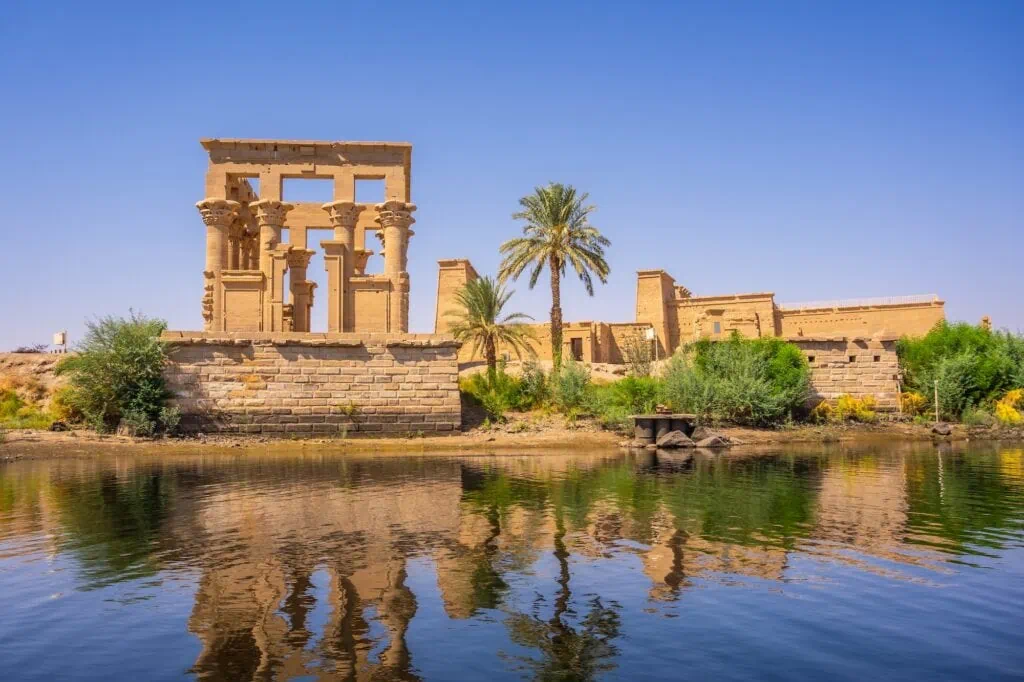
The Temple of Isis forms the centerpiece of this complex, featuring elegant columns with varied capitals depicting lotus flowers, palm fronds, and composite designs. The birth house (mammisi) celebrates the divine birth of Horus, son of Isis and Osiris, through beautiful relief carvings that retain much of their original coloring.
Philae’s location surrounded by Nile waters created a mystical atmosphere that enhanced its religious significance. Ancient pilgrims traveled from across the Mediterranean world to worship Isis here, making Philae an international religious center during Greco-Roman times.
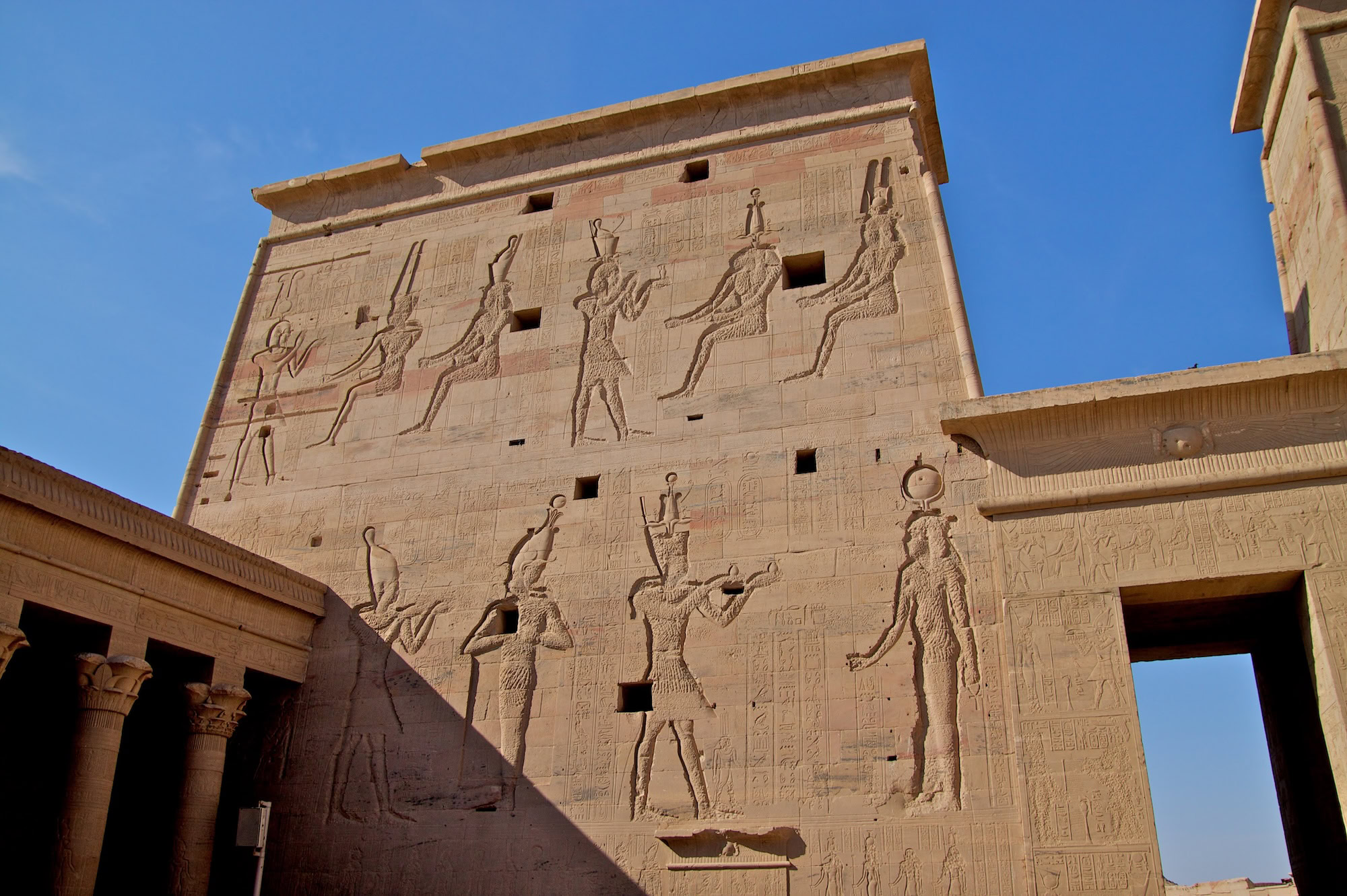
Hieroglyphic inscriptions at Philae include some of the latest examples of ancient Egyptian writing, providing valuable insights into how the religion and language evolved during the temple’s final centuries of use.
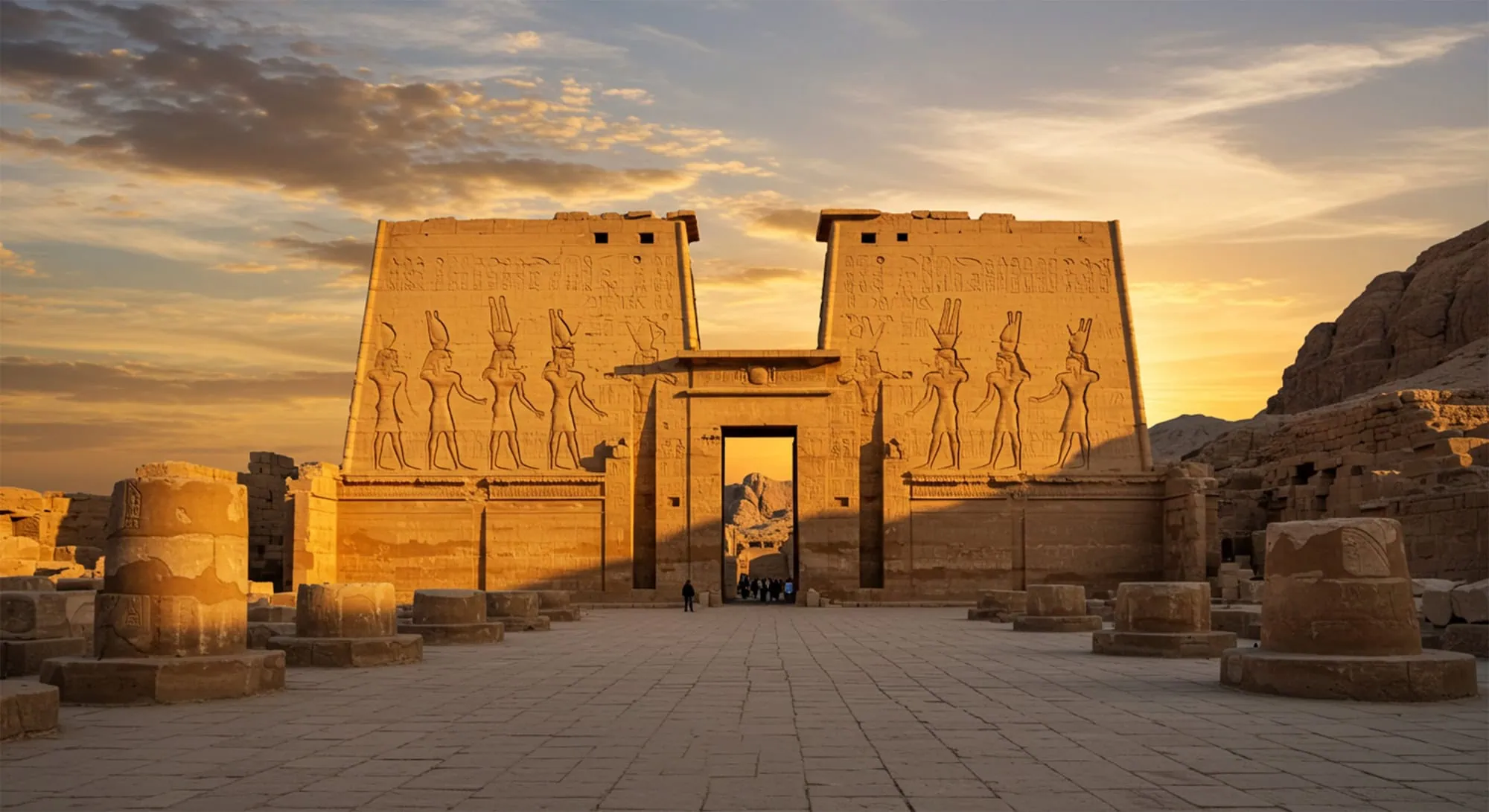
The sound and light show presented here each evening illuminates the temple’s stunning architecture against the dark Nile waters.
Edfu Temple: Most Complete Ancient Temple
Edfu Temple, dedicated to the falcon god Horus, survives as the most complete and best-preserved temple in Egypt. Built during the Ptolemaic period between 237 and 57 BCE, this temple follows traditional pharaonic design principles while incorporating Greek architectural influences.
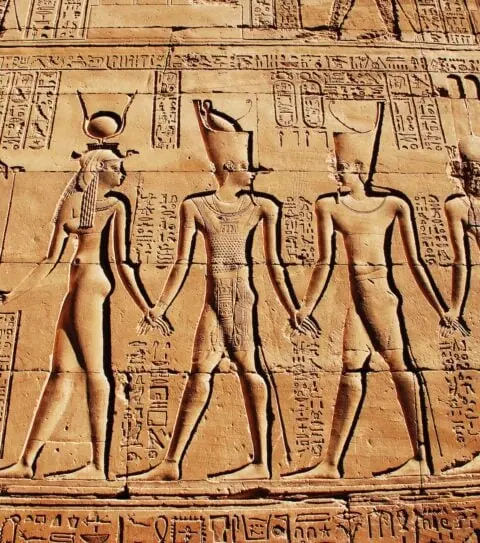
The massive entrance pylon rises 118 feet high and spans 230 feet wide, decorated with colossal reliefs showing Ptolemy XII smiting enemies before Horus. The temple’s excellent preservation allows visitors to experience ancient Egyptian temple architecture exactly as worshippers did two thousand years ago.
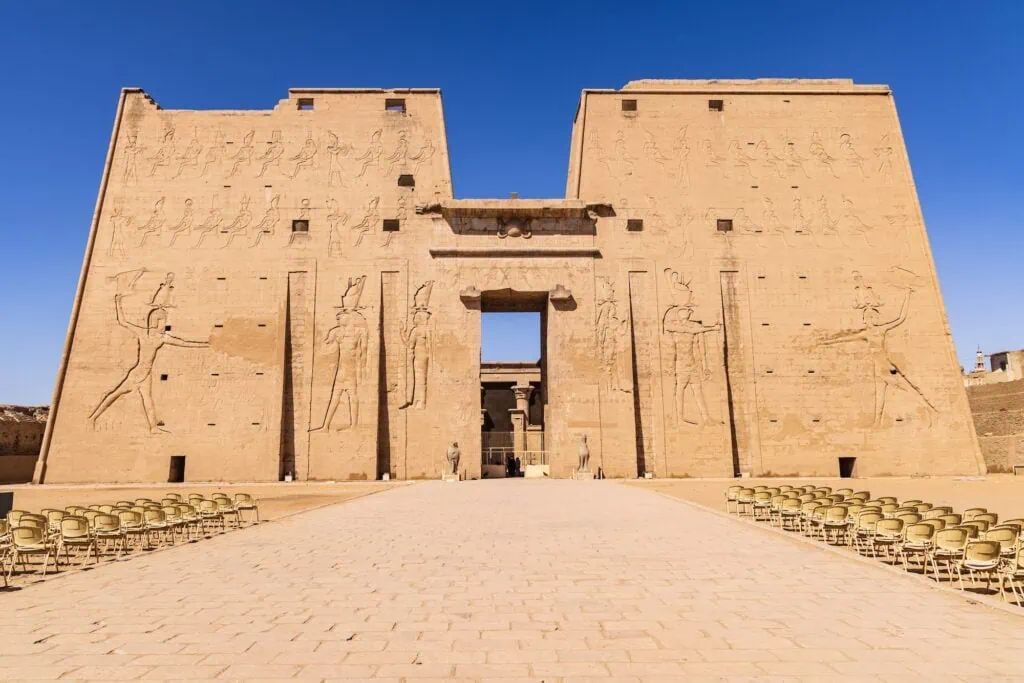
Inside the hypostyle hall, eighteen columns support the roof while walls display detailed reliefs of religious ceremonies and mythology. The temple’s inner chambers house the sacred barque shrine and contain Egypt’s most complete set of temple wall texts, providing invaluable information about ancient religious practices and beliefs.
Sacred Drama of Horus
Edfu’s walls preserve the complete version of the mythological conflict between Horus and Seth, the most important story in Egyptian religion.
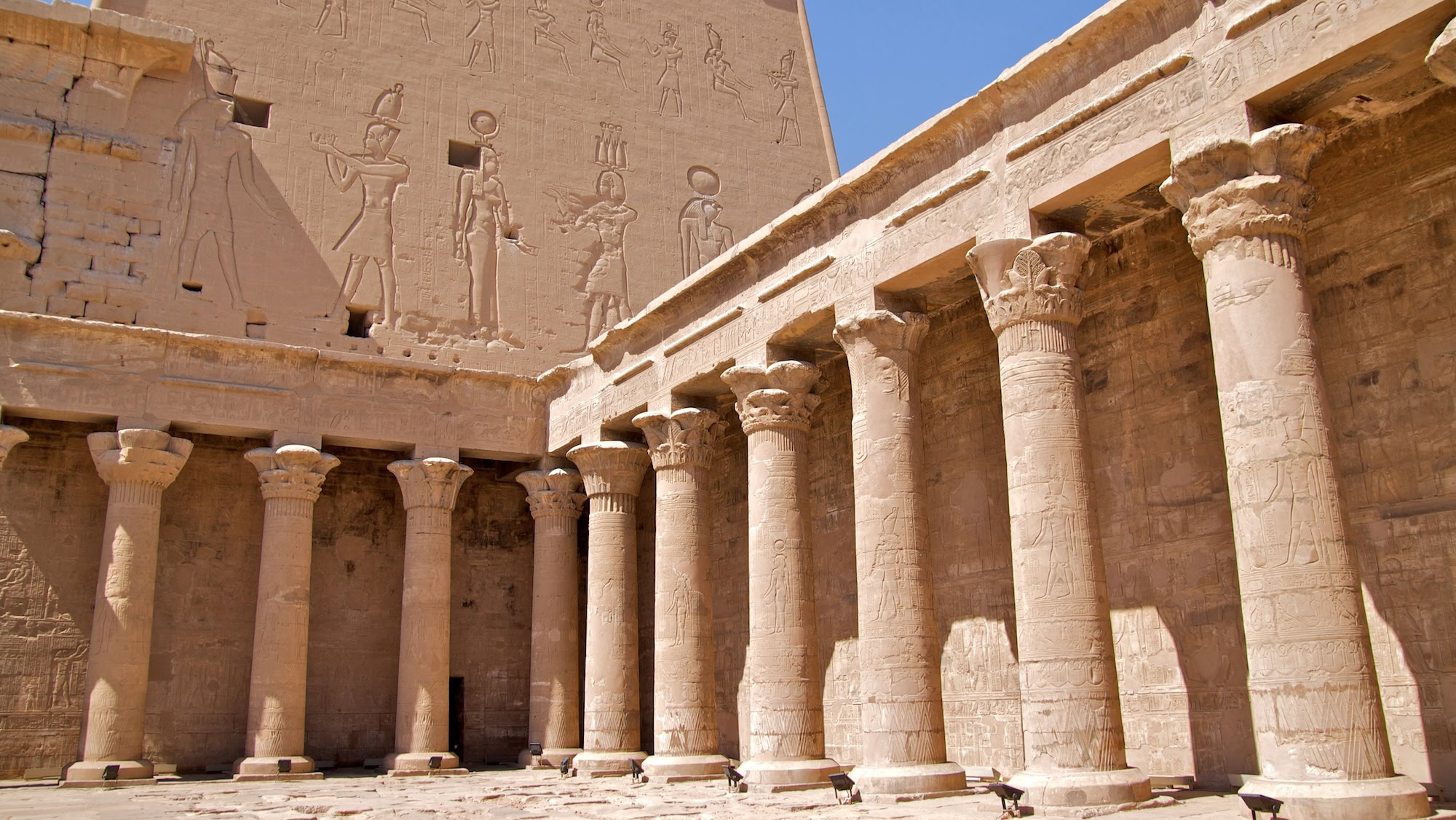
These detailed reliefs and hieroglyphic texts describe how Horus avenged his father Osiris’s murder and became rightful ruler of Egypt, establishing the divine basis for pharaonic kingship.
Hatshepsut Temple: Revolutionary Architecture
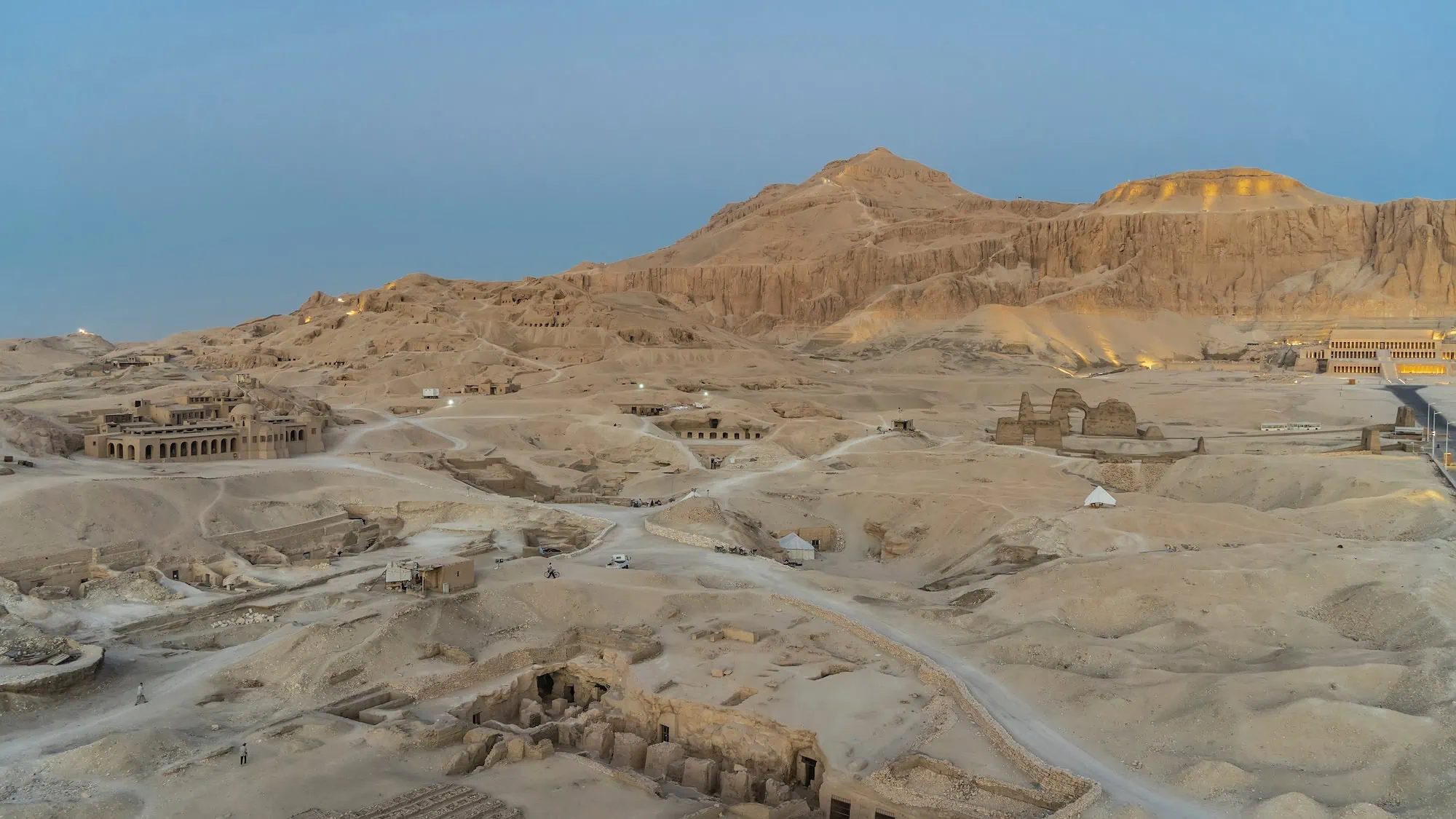
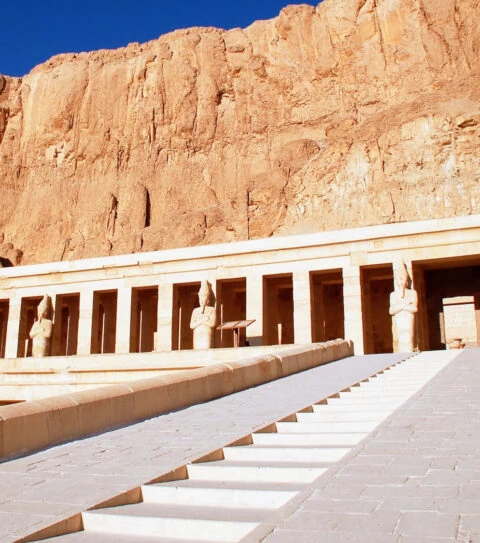
Queen Hatshepsut’s mortuary temple at Deir el-Bahari breaks dramatically from traditional Egyptian temple design. Built into limestone cliffs on the west bank of the Nile near Luxor, this terraced structure features three levels connected by ramps, creating a striking harmony between architecture and natural landscape.
The temple’s innovative design influenced architecture for centuries afterward. Colonnaded terraces provide shaded walkways decorated with reliefs depicting Hatshepsut’s divine birth, trading expeditions to the mysterious land of Punt, and religious ceremonies honoring Amun-Ra and Hathor.
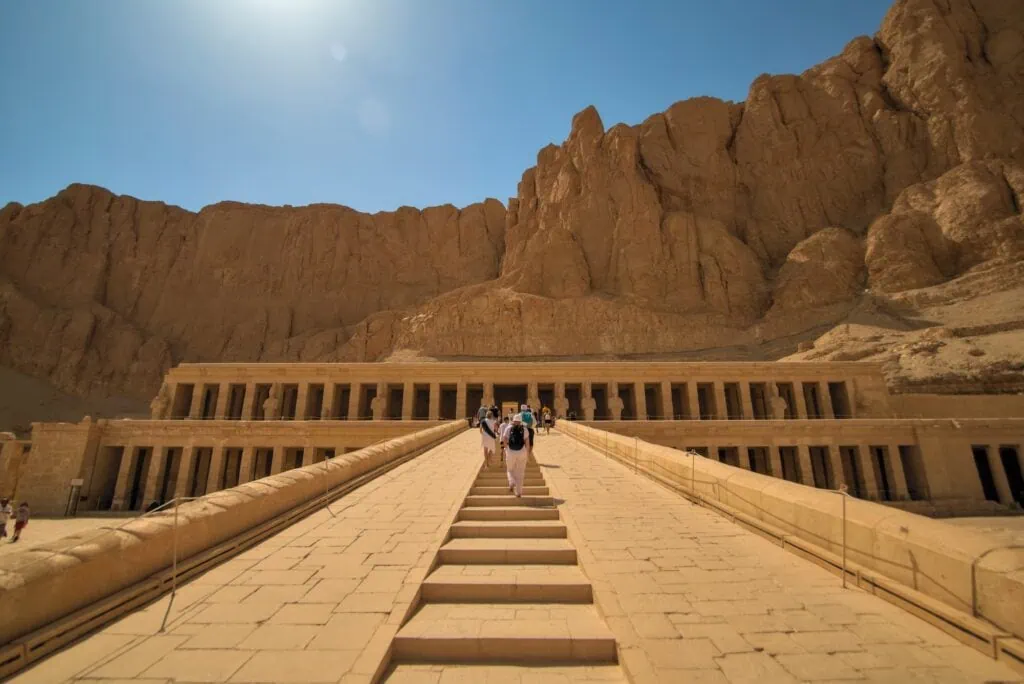
Hatshepsut ruled Egypt as pharaoh for twenty-two years during the 18th Dynasty, one of history’s most successful female rulers. Her temple celebrates this achievement through artistic programs that legitimized her unprecedented position as a woman pharaoh in a male-dominated society.
The Punt Reliefs remain among the temple’s most fascinating features, showing exotic animals, trees, and people from trading expeditions to East Africa. These detailed carvings provide rare glimpses into ancient Egyptian knowledge of distant lands and international commerce.
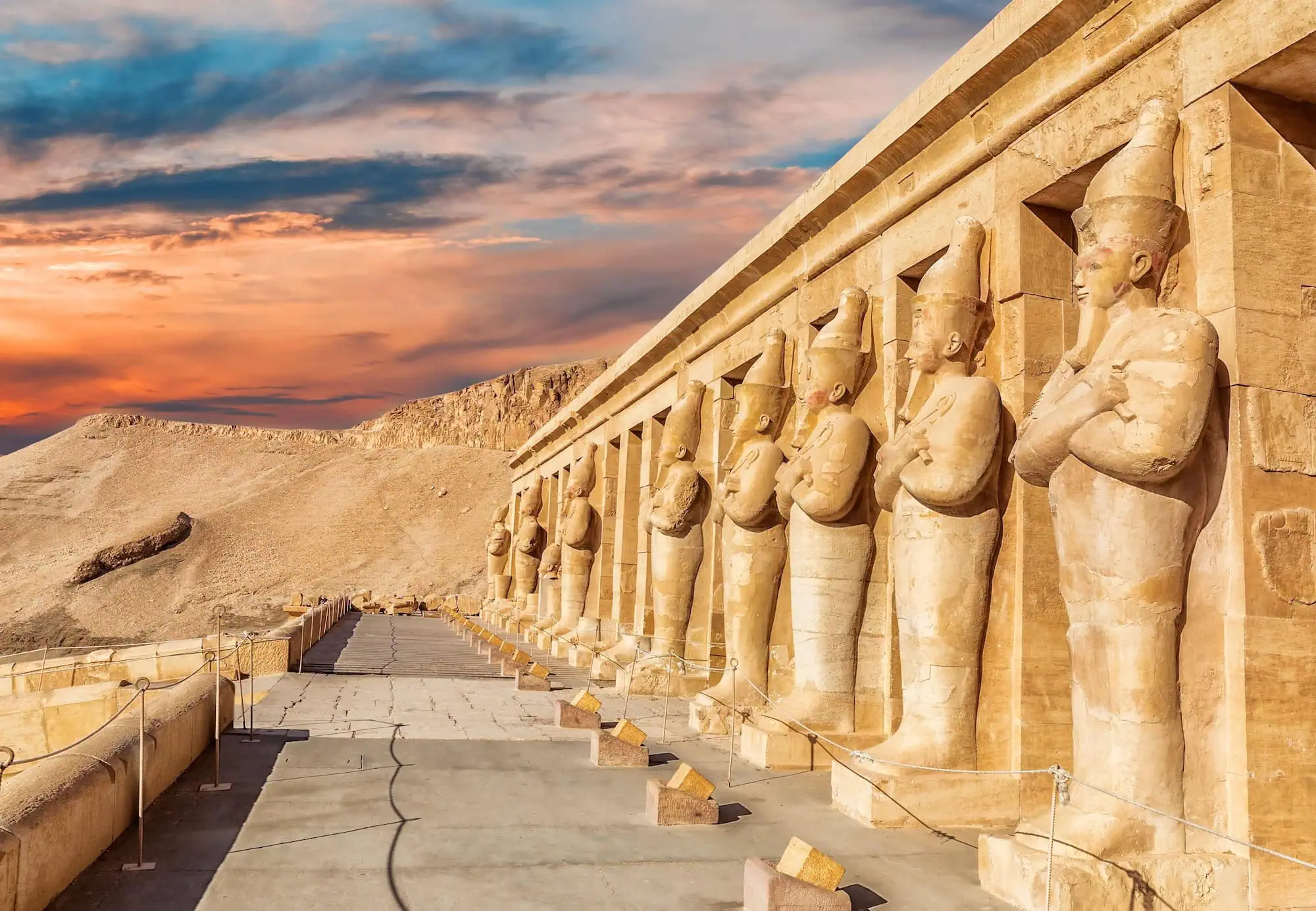
Chapel of Hathor within the temple complex features columns topped with the cow-eared goddess’s face, demonstrating the sophisticated sculptural techniques Egyptian artisans achieved. The chapel’s intimate scale contrasts beautifully with the temple’s grand terraced design.
Kom Ombo: Unique Double Temple
Kom Ombo Temple stands unique among Egyptian monuments as the only temple dedicated to two different gods. The northern section honors Haroeris (Horus the Elder), while the southern portion serves Sobek, the crocodile god. This dual dedication creates a perfectly symmetrical structure with duplicate entrances, halls, and sanctuaries.
Built during the Ptolemaic period on a bend of the Nile, Kom Ombo controlled an important trade route between Egypt and Nubia. The temple’s strategic location made it both a religious center and military outpost protecting Egypt’s southern frontier.
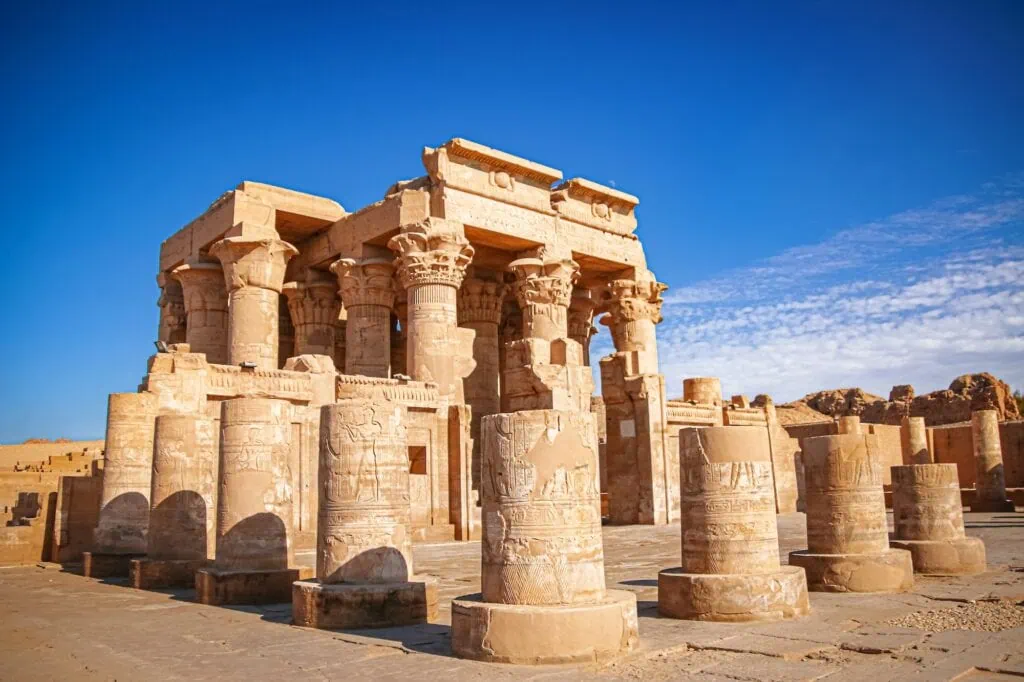
Sobek’s association with the Nile’s fertile powers made him popular among local farmers, while Horus represented royal divine authority. This combination reflected the temple’s role serving both common people and government officials in the region.
The temple walls contain fascinating reliefs showing ancient medical and astronomical knowledge. Surgical instruments, including scalpels, forceps, and bone saws, demonstrate the advanced medical practices Egyptian priests performed. Star charts and calendars reveal sophisticated understanding of astronomy and mathematics.
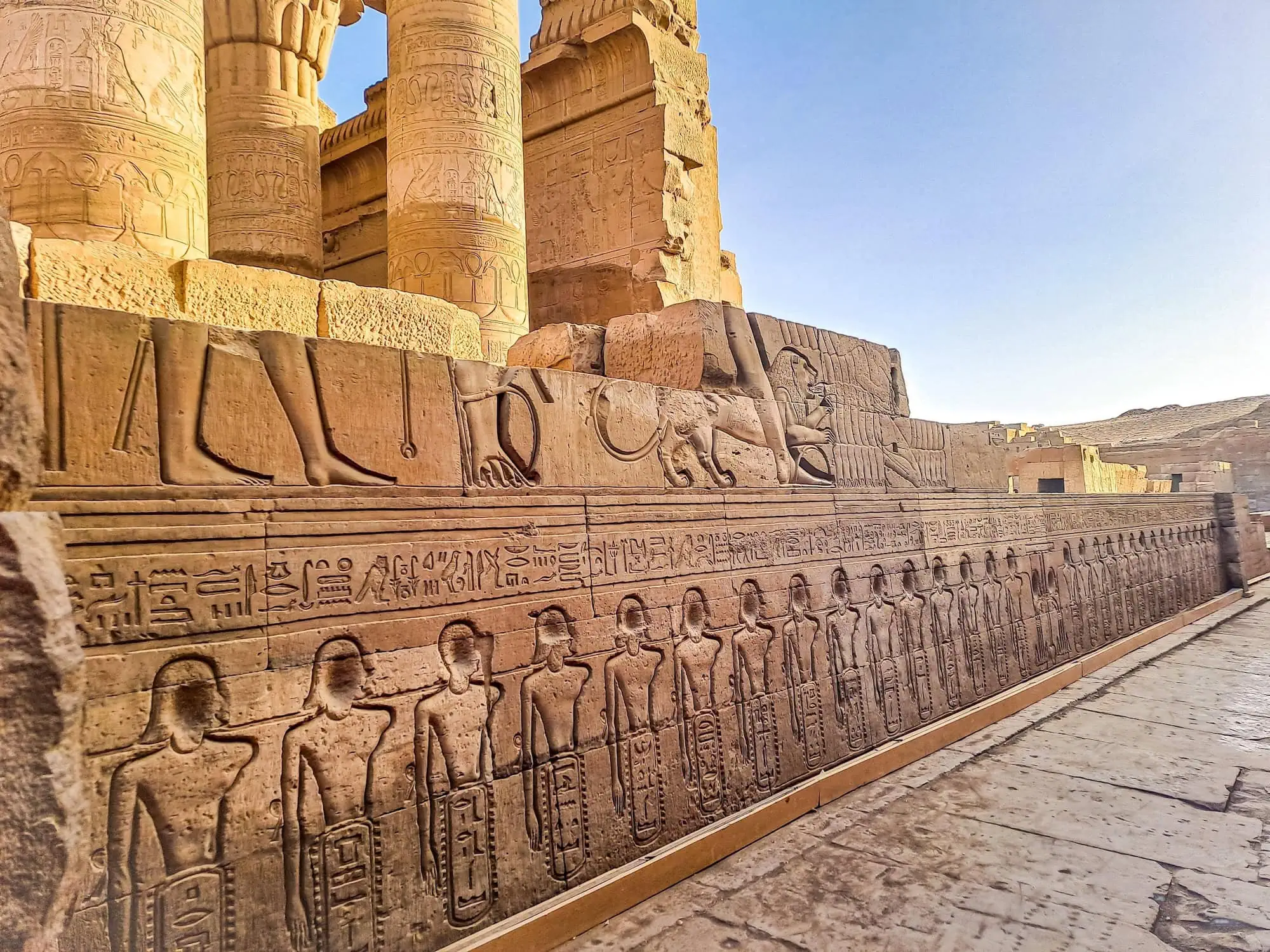
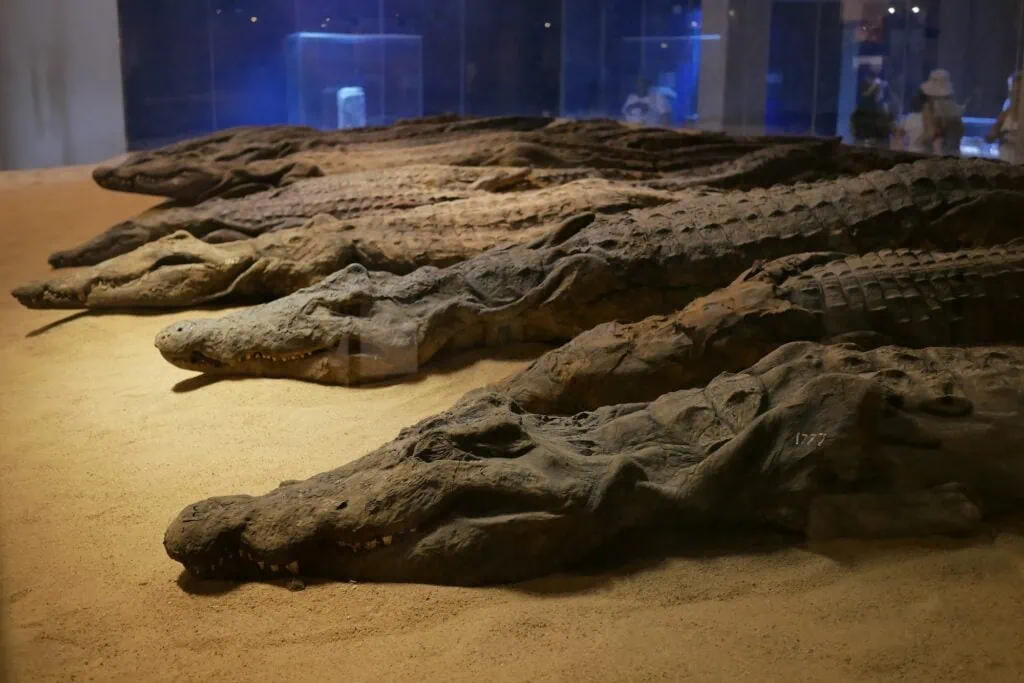
A nearby crocodile museum displays mummified crocodiles discovered in local cemeteries, showing how seriously ancient Egyptians took Sobek worship. Living sacred crocodiles once resided in pools near the temple, fed and cared for by priests as earthly manifestations of the god.
Valley of Kings: Royal Underground Temples
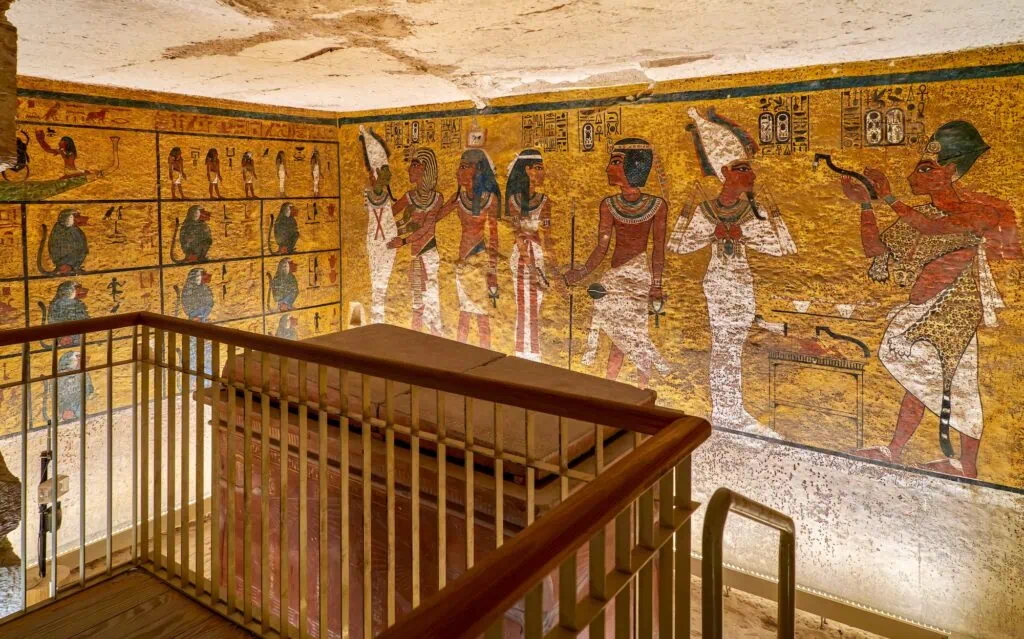
While not traditional temples, the elaborate tomb chapels in the Valley of the Kings functioned as mortuary temples ensuring pharaohs’ successful journey to the afterlife. These underground chambers contain Egypt’s finest religious art, depicting the pharaoh’s transformation into a god through death and rebirth.
Tomb walls feature complete copies of religious texts like the Book of the Dead, Pyramid Texts, and Coffin Texts. These sacred writings provided magical spells and guidance needed for navigating the dangerous underworld journey to eternal life with Ra, the sun god.
The tomb of Seti I extends over 450 feet into the limestone hillside, decorated with some of ancient Egypt’s most beautiful astronomical ceiling paintings. Stars, constellations, and zodiacal signs cover the burial chamber ceiling, creating a celestial map guiding the king’s soul through the night sky.
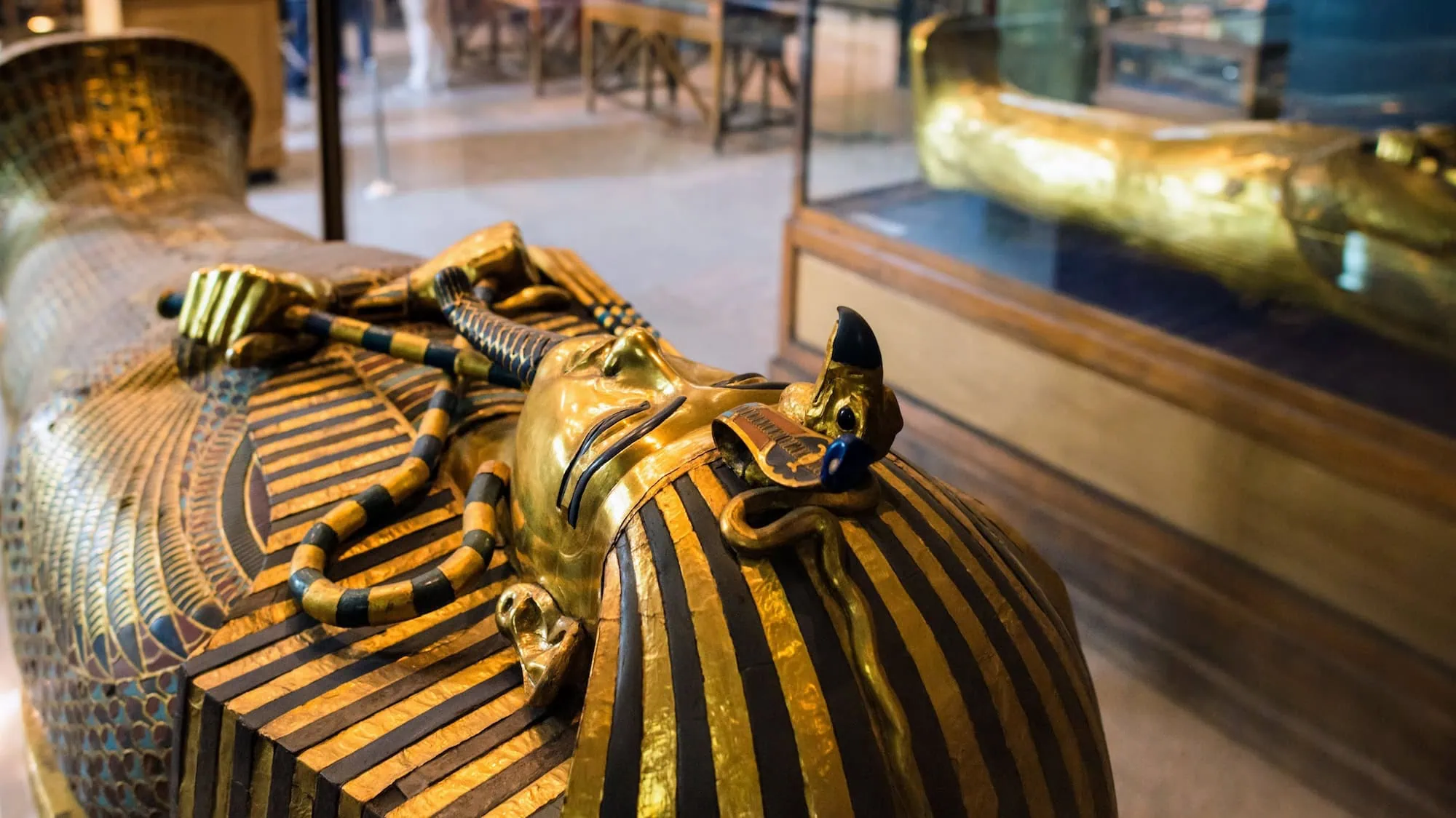
Tutankhamun’s tomb, though small compared to other royal burials, contained the most complete set of burial equipment ever discovered. The golden shrine, canopic jars, jewelry, and ceremonial objects reveal how elaborately Egyptians prepared pharaohs for their divine afterlife transformation.
Recent discoveries continue revealing new tombs and expanding our understanding of royal burial practices. Advanced imaging technology now allows archaeologists to explore sealed chambers without damaging ancient decorations, promising future revelations about these sacred royal temples.
Modern Preservation and Archaeological Discoveries
Egyptian temples face ongoing challenges from environmental factors, tourism impact, and urban development pressures. The Egyptian Ministry of Tourism and Antiquities works with international organizations to implement conservation programs protecting these irreplaceable monuments for future generations.
Recent archaeological discoveries continue expanding our knowledge of ancient temple complexes. Ground-penetrating radar has revealed previously unknown chambers, underground passages, and buried structures around major temple sites. These findings suggest many temples were far larger and more complex than previously understood.
Climate change poses new threats to temple preservation. Increased flooding, extreme temperatures, and humidity fluctuations accelerate stone deterioration and damage painted decorations. Modern conservation techniques including laser cleaning, structural reinforcement, and protective coatings help minimize these impacts.
Digital documentation projects are creating detailed 3D models of temple decorations and architecture before further deterioration occurs. These virtual records preserve artistic details for researchers while enabling worldwide access to Egypt’s temple heritage through online platforms and virtual reality experiences.
We work closely with local archaeological teams and conservation specialists to ensure our temple visits contribute positively to preservation efforts while providing authentic educational experiences. Our expert guides share the latest archaeological discoveries and research findings, bringing these ancient monuments to life through historical context and cultural insights.
Stand Inside the Temples You’ve Just Read About
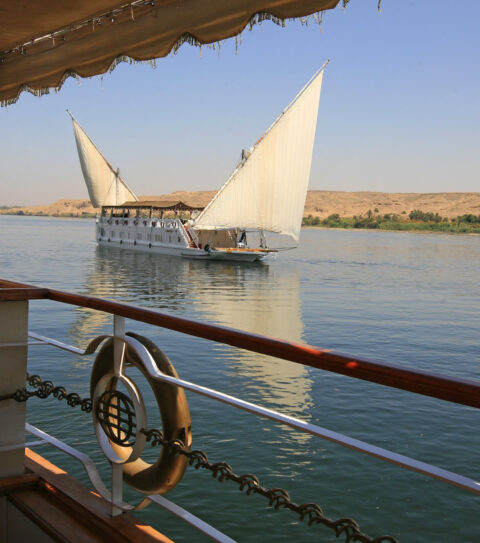
Reading about Karnak’s 134 columns is one thing. Walking between them, with the central twelve rising 69 feet over your head, is another. Most of the temples in this guide cluster along the Nile. Karnak and Luxor on the east bank, Hatshepsut and the Valley of the Kings on the west, then Edfu, Kom Ombo, Philae, and Abu Simbel south through Aswan. A Nile cruise threads through them in the order pharaohs and pilgrims have moved between them for three thousand years.
Tell your Travel Concierge which temples matter most to you, whether you want the full sweep with cruise included, a Cairo-and-Luxor concentration, or a specialist focus on Ramesside or Ptolemaic sites. Your private Egyptologist guide reads the wall reliefs as you stand in front of them. First-draft itinerary back in your inbox within 1 to 12 hours.
Frequently Asked Questions
Early morning visits offer cooler temperatures and fewer crowds for better experiences.
Allow 3-4 hours for Karnak Temple Complex to fully appreciate its vast scale.
Most hieroglyphics are original ancient carvings with careful restoration for preservation.
Sunlight penetrates 185 feet twice yearly demonstrating ancient Egyptian astronomical precision.
Most inner sanctuaries remain accessible though some require special tickets.
Deliberate damage during early Christian periods and natural weathering caused statue destruction.
Comfortable shoes, light loose clothing covering shoulders and knees, sun protection.
No modern structures match ancient Egyptian temples’ scale, complexity, or precision.
Archaeological surveys regularly uncover previously unknown temple sites using advanced technology.
Women served as priestesses, musicians, dancers, and administrators in temple complexes.
Ancient Egyptians used ramps, rollers, levers, and seasonal flooding for moving stones.
Recent scans detect previously unknown voids suggesting future archaeological discoveries await.
Design Your Custom Tour
Explore Egypt your way by selecting only the attractions you want to visit